
 Brian Fairchild

Important: The information in this post is intended for educational purposes only and does not constitute medical advice. Always consult your physician before making changes to your diet, exercise routine, or treatment plan, particularly if you have been diagnosed with elevated blood pressure or a cardiovascular condition.
Borderline hypertension affects more than one in three Americans, yet most people in this range hear only reassuring words at their annual checkup. Your numbers are a little high, the conversation goes, but you are not hypertensive yet. Come back next year. That framing is understandable, but it leaves out the part that matters most: the cardiovascular risks associated with borderline hypertension begin well below the clinical threshold of 140/90 mmHg, and they are measurable and significant.
Borderline hypertension, also called prehypertension, is defined as a systolic reading between 120 and 139 mmHg or a diastolic reading between 80 and 89 mmHg. It sits above the ceiling of normal and below the floor of clinical hypertension. That does not mean it is neutral territory. A large and growing body of peer-reviewed evidence shows that risks of heart disease, stroke, and cardiovascular death rise progressively as blood pressure climbs, starting long before any formal diagnosis. Understanding that evidence is the first step to using this window of opportunity effectively.
Understanding why blood pressure rises in the first place puts borderline readings into context. For a full breakdown of the 10 most common drivers, see our guide to the causes of high blood pressure.
It was 150/100, this morning it was 110/79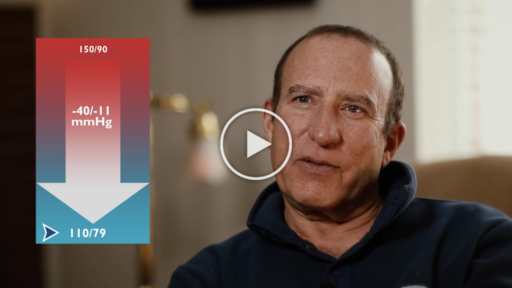
Watch How Mark Lowered His Blood Pressure Naturally.
What the Research Actually Shows About Borderline Hypertension Risk
The original framing around borderline hypertension was cautious for a reason. No medication is typically prescribed at this stage unless other high-risk conditions, such as coronary artery disease, diabetes, or chronic kidney disease, are present. Dr. Randall Zusman, a hypertension specialist at Harvard-affiliated Massachusetts General Hospital, has explained the clinical reasoning plainly: very few people will avoid developing high blood pressure over a lifetime, so the real objective of intervening at the borderline stage is delaying the point at which medication becomes necessary.
That framing is accurate. But it does not tell the whole cardiovascular story.
Borderline hypertension and cardiovascular disease risk
A comprehensive meta-analysis published in BMC Medicine pooled data from 18 prospective cohort studies covering 468,561 participants. It found that prehypertension significantly elevated the risk of cardiovascular disease by 55 percent, coronary heart disease by 50 percent, and stroke by 71 percent, compared with optimal blood pressure below 120/80 mmHg. These findings held after adjustment for other cardiovascular risk factors. Prehypertension was an independent risk factor, not just a marker of people who also happened to have other problems.
Source: Huang Y et al. Prehypertension and incidence of cardiovascular disease: a meta-analysis. BMC Med. 2013;11:177. View on PMC
Borderline hypertension and stroke risk
A separate meta-analysis, published in Neurology and covering 19 studies, found that prehypertension increased the risk of stroke by 66 percent compared with optimal blood pressure. Even low-range prehypertension, readings of 120 to 129/80 to 84 mmHg, raised stroke risk by 44 percent. The risk was greatest in the upper range, with readings between 130 and 139/85 and 89 mmHg, where stroke risk nearly doubled.
Source: Ovbiagele B et al. Prehypertension and the risk of stroke: a meta-analysis. Neurology. 2014;82:1192–1198. View on PubMed
Borderline hypertension and cardiovascular mortality
A third meta-analysis, drawing on 1,129,098 participants across 20 prospective cohort studies, found that prehypertension significantly increased cardiovascular mortality by 28 percent and stroke mortality by 41 percent. The pattern across all three analyses is consistent. Borderline hypertension is not a waiting room for disease. It is a risk state with documented, quantified consequences.
Source: Li B et al. Association of all-cause and cardiovascular mortality with prehypertension: a meta-analysis. Am J Cardiol. 2014;113:524–529. View on PubMed
Why the False Sense of Security Is the Biggest Danger
One of the most common and consequential responses to a borderline hypertension diagnosis is a false sense of security. The reading is elevated but not alarming. The doctor does not prescribe anything. Life continues unchanged.
That reaction is understandable. It is also dangerous, for two reasons. First, the evidence above shows that elevated risk begins accumulating in the borderline range, not after crossing 140/90. Second, borderline hypertension is the most actionable stage. Lifestyle interventions produce their strongest results before structural cardiovascular changes have accumulated. The strategies below are not consolation prizes for people who missed their chance to take action. They are the most effective tools available, deployed at precisely the right moment.
What You Can Do About Borderline Hypertension
Follow the DASH Diet
The Dietary Approaches to Stop Hypertension diet is the most evidence-supported dietary strategy for blood pressure management, and its benefits begin in the prehypertensive range. A systematic review and meta-analysis of 17 randomized controlled trials covering 2,561 participants, published in Cureus, found that the DASH diet reduced systolic blood pressure by an average of 6.74 mmHg and diastolic by 3.54 mmHg. The 2025 AHA/ACC hypertension guidelines endorse the DASH diet for individuals with elevated blood pressure, backed by clinical trial evidence showing systolic reductions of 1 to 13 mmHg.
The DASH diet emphasizes fruits, vegetables, whole grains, and low-fat dairy while limiting saturated fat and sodium. It is specifically designed to boost intake of potassium, calcium, and magnesium, three minerals with direct blood pressure-lowering effects. For a deeper look, see our DASH diet guide.
Source: Onwuzo C et al. DASH Diet: A Review of Its Scientifically Proven Hypertension Reduction and Health Benefits. Cureus. 2023;15(9):e44692. View on PMC
Reduce Sodium Intake
Sodium raises blood pressure by increasing fluid volume and reducing the kidneys’ ability to excrete excess fluid. Current guidelines recommend limiting sodium to no more than 2,300 milligrams per day for most adults, equivalent to about one teaspoon of salt. For people with borderline hypertension or cardiovascular risk factors, a lower target of 1,500 milligrams per day produces additional systolic reductions of 2 to 7 mmHg beyond the standard target.
In practice, that means checking labels on packaged foods, reducing restaurant meals, and replacing added salt with herbs, garlic, lemon, and spices. The American Heart Association offers a useful overview of how sodium affects blood pressure.
Get Regular Physical Activity
Exercise is one of the most effective lifestyle interventions for borderline hypertension. A 2024 JAMA Network Open randomized clinical trial of 342 participants with prehypertension found that 12 months of regular exercise, whether aerobic activity or tai chi, significantly reduced systolic blood pressure. Aerobic training consistently produces systolic reductions of 3 to 5 mmHg in prehypertensive adults. A 2024 network meta-analysis covering 2,592 individuals found that aerobic training, resistance training, and combined programs each produced meaningful reductions in both systolic and diastolic blood pressure.
The practical target is at least 150 minutes of moderate-intensity activity per week, distributed across most days. Brisk walking, cycling, and swimming all qualify. For a deeper look, see our guide to the best exercise to reduce blood pressure.
Source: Li X et al. Effect of Tai Chi vs Aerobic Exercise on Blood Pressure in Patients With Prehypertension: A Randomized Clinical Trial. JAMA Netw Open. 2024;7(2):e2354937. View on PMC
Reach and Sustain a Healthy Weight
Body weight and blood pressure are closely linked. A meta-analysis published in the Journal of Clinical Hypertension covering 35 studies and 3,219 participants found that a modest BMI reduction of 2.27 kg/m² reduced systolic blood pressure by 5.79 mmHg and diastolic by 3.36 mmHg. An AHA scientific statement confirmed that a 5 to 10 percent loss of body weight can reduce systolic blood pressure by more than 5 mmHg. Even modest weight loss produces measurable benefit, with approximately 1 mmHg of systolic reduction for each kilogram lost. For a deeper look at why the scale often works against sustained weight loss, and what behavioral research suggests instead, see our post on why the scale may be sabotaging your progress.
Source: Yang H et al. Effect of weight loss on blood pressure changes in overweight patients. J Clin Hypertens. 2023;25(5):424–432. View on PMC
Limit Alcohol
Current evidence supports no more than two standard drinks per day for men and one per day for women, with lower being better for cardiovascular health. If you do not currently drink, there is no cardiovascular benefit to starting. Regular alcohol consumption raises blood pressure through multiple mechanisms, including activation of the sympathetic nervous system and direct effects on arterial tone.
Manage Stress
The relationship between stress and blood pressure is more nuanced than popular accounts suggest. Acute stress raises blood pressure temporarily, and those readings return to baseline once the stressor passes. However, chronic stress promotes unhealthy behaviors including overeating, poor sleep, reduced physical activity, and increased alcohol consumption, each of which independently raises blood pressure over time. For people with borderline hypertension, managing stress is not just about relaxation. It is about protecting the behavioral infrastructure that supports every other intervention on this list. See our deeper look at how stress affects blood pressure.
It was 170/110, this morning it was 120/80
Watch how Julie Lowered her Blood Pressure Naturally.


Monitor Your Blood Pressure at Home
A home blood pressure monitor gives you tracking data that a once-yearly clinic reading cannot. Take readings twice daily, once in the morning before eating or taking any medication, and once in the evening. Log the results. A single high reading has limited meaning. Patterns over weeks and months give you and your physician genuinely useful information for decisions about your care. For guidance on choosing a device, see our review of the best home blood pressure monitors.
Where RESPeRATE Fits in Your Borderline Hypertension Plan
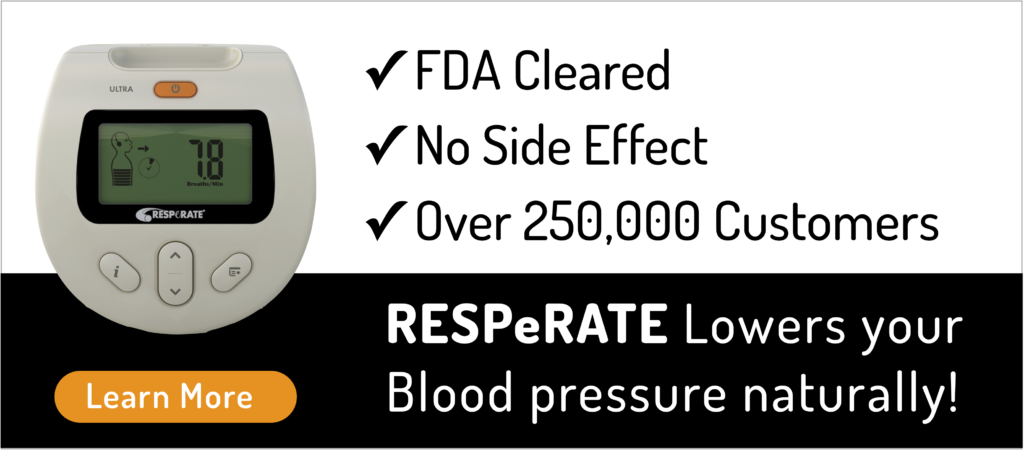
RESPeRATE is the only FDA-cleared non-drug device clinically proven to lower blood pressure. It works by guiding you through slow-paced breathing with prolonged exhalation, a technique shown to reduce sympathetic nervous system activity and relax constricted blood vessels. More than 50 published studies support its effectiveness, with consistent reductions in systolic and diastolic blood pressure across diverse populations.
For people with borderline hypertension, RESPeRATE offers a clinically supported tool that complements every strategy described above. It does not replace dietary changes, exercise, or weight management. Rather, it addresses the neural and vascular component of elevated blood pressure that lifestyle changes alone may not fully resolve. Fifteen minutes per day, used consistently, fits into any routine.
RESPeRATE works alongside your physician-directed treatment plan. It has no side effects, no drug interactions, and no contraindications with any of the lifestyle approaches described in this post. You can review the full clinical evidence at our clinical proof page, or learn how it works.
Summary
Borderline hypertension is not a benign waiting state. Peer-reviewed meta-analyses covering more than one million participants show that cardiovascular disease risk, stroke risk, and cardiovascular mortality are all meaningfully elevated in the prehypertensive range, before a clinical diagnosis of hypertension is made. The good news is that this is the most responsive stage. Dietary changes, regular exercise, weight management, sodium reduction, stress management, and device-guided breathing with RESPeRATE all produce documented, measurable blood pressure reductions.
The evidence supports acting now, not at 140/90.
Ready to add a clinically proven tool to your borderline hypertension plan? Explore RESPeRATE today and use it as part of your overall health program, alongside your physician-directed treatment plan.


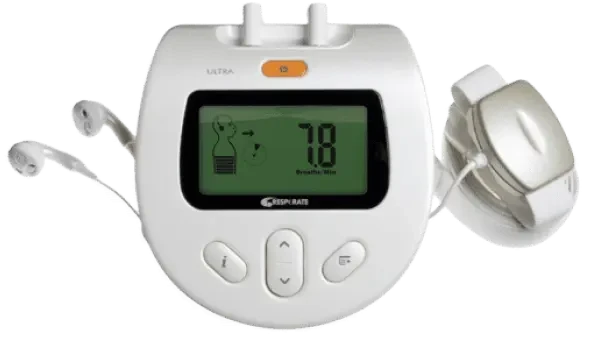
 Clinically proven


 Eli




