
 Brian Fairchild
Dessert and blood pressure management do not often appear in the same sentence. Most people trying to lower their numbers hear “no sweets” and imagine a lifetime of sparkling water and rice cakes. This recipe begs to differ.
This mango-banana frozen yogurt delivers something most desserts do not: real cardiovascular benefit hiding inside every scoop. Mango, banana, orange juice, lime, and probiotic-rich yogurt each bring something specific and meaningful to your heart health. And it takes about five minutes of active prep before the freezer does the rest.
It is also genuinely delicious, which matters. A heart-healthy diet only works if you stick to it, and you only stick to it if the food makes you happy. This one passes that test easily.
Why This Frozen Yogurt Is Good for Your Heart
Let’s look at what each ingredient brings to the cardiovascular table, because the case here is surprisingly strong.
Mango: Mangiferin, Potassium, and Real Blood Pressure Data
Mango is one of the most nutritionally complex tropical fruits available. A single cup delivers around 277 milligrams of potassium, meaningful doses of vitamin C and A, and three grams of soluble fiber. It also contains mangiferin, a polyphenol found almost exclusively in mangoes, with growing research interest for cardiovascular benefits.
A 12-week clinical trial published in 2022 studied daily mango consumption in postmenopausal women. The mango group saw a statistically significant drop in both systolic and diastolic blood pressure, averaging around 3.6 mmHg systolic and 2.1 mmHg diastolic reductions. That is a meaningful change from a single dietary addition.
Earlier research from the University of California Davis found that mango consumption helped relax blood vessels within two hours of intake. The researchers attributed this partly to mango’s potassium content and partly to its polyphenol profile, particularly mangiferin’s apparent ability to reduce vascular inflammation.
Quercetin, another flavonoid found in mango, has its own cardiovascular research base. A meta-analysis of randomized controlled trials published in the Journal of the American Heart Association found quercetin supplementation reduced systolic blood pressure by 3 mmHg and diastolic by 2.6 mmHg on average.
Quercetin meta-analysis: Serban MC et al., JAHA 2016. View on AHA Journals
RESPeRATE also has a full post on mango and blood pressure if you want to dive deeper.
Banana: Nature’s Most Portable Potassium Delivery System
A single medium banana contains 422 milligrams of potassium, about nine percent of the daily recommended intake for an adult. That number matters because potassium is one of the most consistently supported non-drug tools for lowering blood pressure across decades of clinical research.
A 2025 dose-response meta-analysis published in Clinical Kidney Journal synthesized 10 randomized controlled trials from 2000 to 2024 and confirmed a clear, linear relationship: higher potassium intake lowers blood pressure, with the greatest effects in people who already have hypertension.
The mechanism is direct. Potassium helps the kidneys clear excess sodium, relaxes blood vessel walls, and counteracts the vasoconstrictive effects of a high-sodium diet. Think of it as the dietary counterweight to one of the most common drivers of elevated blood pressure in the modern world.
Bananas also bring about three grams of fiber per serving, B6 for cardiovascular enzyme function, and magnesium, which independently supports blood vessel relaxation.
Potassium dose-response meta-analysis: Leoncini G et al., Clin Kidney J 2025. View at Oxford Academic
AHA potassium and blood pressure overview. View at AHA
It was 150/100, this morning it was 110/79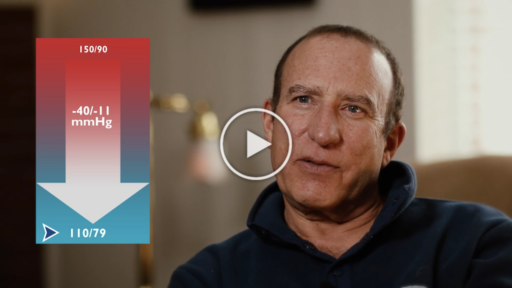
Watch How Mark Lowered His Blood Pressure Naturally.

Orange Juice: Hesperidin and the Endothelial Function Story
The orange juice in this recipe is not just a flavor carrier. Citrus juice is a meaningful source of hesperidin, a flavanone with evidence for improving endothelial function. The endothelium is the inner lining of your blood vessels. When it works well, vessels dilate easily and blood pressure stays lower. When it is inflamed or stiff, blood pressure climbs.
A randomized crossover study in overweight men found that daily consumption of orange juice improved microvascular reactivity and reduced diastolic blood pressure compared to a placebo drink. The researchers linked the benefit specifically to hesperidin, the most abundant flavonoid in citrus juice.
Orange juice also delivers a potassium boost of about 190 milligrams per serving, adding to the potassium from the banana and mango, and provides vitamin C, which supports vascular health independently.
Hesperidin and orange juice for vascular health: Morand C et al., Am J Clin Nutr 2011. View on PubMed
Low-Fat Yogurt: Probiotics, Calcium, and Cardiovascular Benefit
The yogurt in this recipe is working on multiple fronts. First, the calcium. Dairy calcium is associated with modest blood pressure reduction. The mechanism involves calcium’s role in vascular smooth muscle contraction, essentially helping blood vessels relax rather than tighten.
More interestingly, the live probiotic cultures in low-fat yogurt have their own cardiovascular research base. A 2024 cross-sectional study published in PMC examined yogurt intake frequency against blood pressure measurements and found a significant inverse association: people who ate yogurt more frequently had lower blood pressure readings.
A 2023 GRADE-assessed systematic review and meta-analysis of probiotic supplementation found statistically significant reductions in systolic blood pressure of 3.57 mmHg and diastolic of 2.05 mmHg in trials of at least eight weeks. Yogurt is not a supplement, but the probiotic mechanism is the same.
Yogurt also contributes protein, which promotes satiety and supports healthy weight, and it delivers the creamy base that gives this frozen dessert its ice cream-like texture without requiring actual cream.
Yogurt intake frequency and blood pressure: Li X et al., PMC 2024. View on PMC
Probiotics and blood pressure meta-analysis: Tian Y et al., Food Sci Human Wellness 2025. View at SciOpen
Lime Juice: Vitamin C and the Vascular Antioxidant Case
A squeeze of lime might seem like a minor addition, but lime juice contributes vitamin C, which has consistent evidence in the cardiovascular literature. Vitamin C is a water-soluble antioxidant that reduces oxidative stress on blood vessel walls. Oxidative stress is one of the key mechanisms driving endothelial dysfunction and arterial stiffness in hypertension.
It also brightens every other flavor in the bowl, which is the more immediately obvious reason to include it.
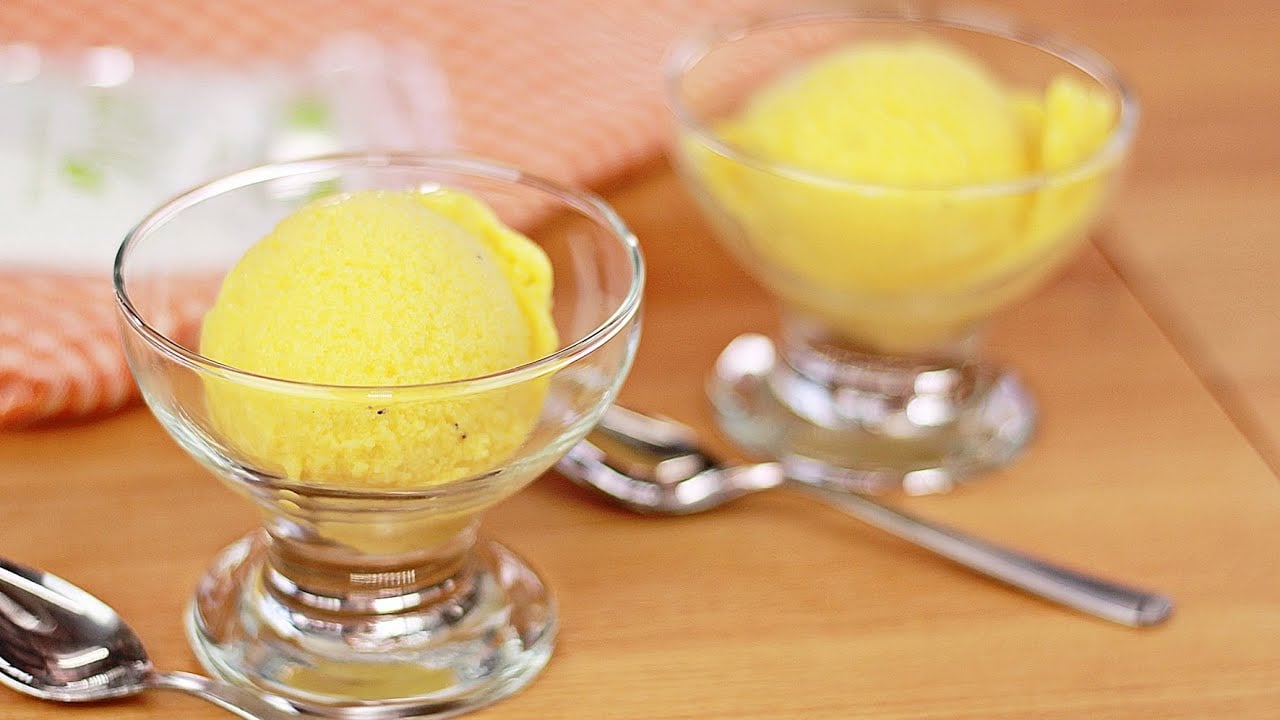
Ingredients
- 1 cup sliced ripe bananas
- 3/4 cup chopped mango (peeled)
- 1/3 cup orange juice
- Juice of a lime
- 1½ cups skimmed milk
- 1/4 cup sugar
- 1 cup vanilla low-fat yogurt
A note on the sugar: the original recipe calls for 1/4 cup of granulated sugar. If you are managing blood pressure or blood sugar, consider skipping it entirely. Ripe mango and banana are naturally very sweet. A 14-day trial of daily mango consumption showed cardiovascular benefits at 330 grams per day with no added sugar. If you do want some sweetness beyond the fruit itself, a tablespoon of raw honey or pure maple syrup is a more heart-friendly option.
A Few Tips Before You Start
Freeze your fruit first. Using frozen mango and banana straight from the freezer instead of fresh gives you a much creamier texture and reduces the final freezing time. Slice the banana into coins and spread mango chunks on a parchment-lined tray. Freeze solid before blending. The result is dramatically smoother.
Blend in stages. Add the frozen fruit and juices first and let the blender fully break them down before adding the milk and yogurt. This prevents the yogurt from deflating the texture. A few scrapes down the sides makes a big difference.
Do not skip the lime. The acidity counterbalances the sweetness and keeps the mango and banana flavors vivid through freezing. Without it, frozen fruit desserts can taste muted.
For a sorbet version: skip the milk entirely and increase the orange juice to ½ cup. The result is lighter, dairy-free, and just as refreshing.
Serving straight from the freezer: let the container sit at room temperature for five minutes before scooping. Frozen yogurt is denser than commercial ice cream and benefits from a brief thaw for the best texture and scoop.
Preparation
1. Combine the bananas, mango, orange juice and lime juice in a blender until smooth and creamy.
2. Add this mixture to the skimmed milk, sugar and low-fat yogurt in a large bowl and whisk together with a hand whisk until light.
3. Pour the mixture into the freezer section of an ice-cream freezer and freeze according to manufacturer’s instructions.
4. After, spoon into a freezer-safe container and cover. Freeze for at least an hour and serve.
It was 170/110, this morning it was 120/80
Watch how Julie Lowered her Blood Pressure Naturally.


A Dessert That Actually Works for Your Heart
Mango banana heart health is not a marketing phrase. It is a nutritional reality backed by clinical research. This frozen yogurt brings together two potassium-rich fruits, a citrus flavanone with vascular benefits, a probiotic-rich dairy base, and a squeeze of antioxidant vitamin C in a dessert that takes five minutes to prepare and zero willpower to eat.
The potassium from the banana and mango relaxes blood vessels and counteracts dietary sodium. The mangiferin in mango reduces vascular inflammation. The hesperidin in the orange juice supports endothelial function. The live cultures in the yogurt contribute the same blood pressure benefit seen in clinical probiotic trials. And the lime juice ties it all together while adding one more layer of vascular antioxidant protection.
None of this requires a prescription or a supplement protocol. It requires a blender, a freezer, and about five minutes on a Tuesday afternoon.
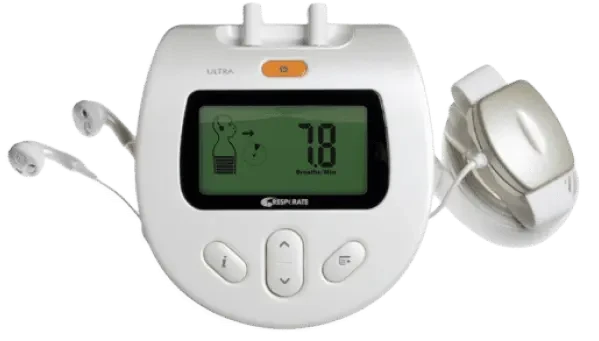
Pair this with your broader heart health routine. RESPeRATE works best as part of your overall health program, alongside your physician-directed treatment plan. Your daily 15 minutes of device-guided breathing and your frozen yogurt are not competing strategies. They are teammates.
We collected dozens of great heart healthy recipes for you — Here they are…
Looking for more ways to support your blood pressure naturally? Explore RESPeRATE today and use it as part of your overall health program, alongside your physician-directed treatment plan.

 Clinically proven

 Eli
Eli 




