
 Eli Ben-Yehuda
A healthy diet—along with regular exercise, stress control, and medications if needed—is a cornerstone of treatment for high blood pressure (hypertension). But what do you need to eat to lower your pressure, and how much?
A good place to start is the Dietary Approaches to Stop Hypertension (DASH) eating plan. It’s scientifically proven to combat hypertension, but it’s not for everyone. “A healthy diet, such as DASH, does take discipline and commitment,” says Dr. Deepak Bhatt, a professor of medicine at Harvard Medical School and chief of cardiology, VA Boston Healthcare System. “People can certainly do it, but it can be challenging.”
Some men may also find a Mediterranean-style diet to be an appealing and effective way to improve blood pressure.
How to DASH it
We’ve known that DASH lowers blood pressure since a landmark study was published in 1997 in The New England Journal of Medicine. After two months of DASH-style eating, study participants lowered their systolic pressure (the upper number of your blood pressure reading) by about 10 mmHg and their diastolic pressure (the lower number) by 5 mmHg. This reduction is comparable to the effect of a blood pressure medication.
The DASH diet is quite different from the conventional meat-centric American diet, which may contain up to a third (or more) of its calories as fats. In the DASH diet, you keep fat intake to within 27% of total calories, eat plentiful servings of fruit and vegetables, choose whole instead of processed grains, and eat low-fat or nonfat dairy products and small portions of poultry, fish, and nuts as your primary source of protein, rather than red meat (see “The DASH eating plan”).
The mix of nutrients in the DASH diet includes abundant amounts of calcium, potassium, magnesium, and fiber. Potassium is particularly important. Foods that are high in potassium include sweet potatoes, tomato paste, and low-fat yogurt. “It’s harder to control blood pressure— even with medications—if there isn’t enough potassium in the diet,” says Dr. Michelle Hauser, a clinical fellow in medicine at Harvard Medical School and a certified chef and nutrition educator.

Watch how Julie Lowered her Blood Pressure Naturally.
It was 170/110, this morning it was 120/80
Learn More
The importance of salt restriction
The DASH diet also is low in salt. The average American man takes in 4,200 milligrams (mg) of sodium per day. That’s nearly three times what’s healthy. The primary sources of the excess salt are processed foods such as soups, cold cuts, cured meats, frozen dinners and other packaged foods, and breads and snacks. Breads are a particularly underappreciated source of sodium—especially fast food bagels and croissants. A single serving of these products may contain 500 mg of salt!
The low-salt version of DASH, which works best overall for hypertension, requires cutting back to 1,500 mg of sodium per day, or the amount in two-thirds of a teaspoon of table salt. A moderate-salt version, with 2,200 mg per day, also lowers blood pressure, but not as much as the low- salt plan.
The challenge of DASH
DASH is medically proven to work, but it does require you to eat a lot of servings of fruit, vegetables, and whole grains—15 to 18 per day, although each serving is typically either a half-cup of cooked vegetables or grain or a whole cup of raw leafy vegetables. That still demands planning, shopping, and the cooking skills to make a plant-based diet tasty.
The nutrition goals of the DASH plan read a bit like a spreadsheet instead of a grocery list. If you are detail-oriented and don’t mind reading nutrition labels and crunching some numbers, the DASH diet is reliable and effective. “Typically, I have seen a lowering of 5 to 10 mmHg in people who are very good about restricting their salt intake and losing weight,” Dr. Bhatt says. “Few people are able to commit to that type of lifestyle change, but those that do certainly reap the benefits.”
The Mediterranean option
Another option is to just follow a healthy style of eating, taking care not to overindulge in animal fats and sugary foods. Adopting a Mediterranean eating plan can help to achieve that.
“I steer people toward a Mediterranean diet, but not because it’s better at lowering blood pressure than the DASH diet. They both work really well,” says Dr. Hauser. “It’s because I think Mediterranean-style eating makes it easier to make things taste good without following a lot of stringent rules. You get a lot of delicious, interesting flavors, textures, and smells, which are the qualities that we really crave in our food.”
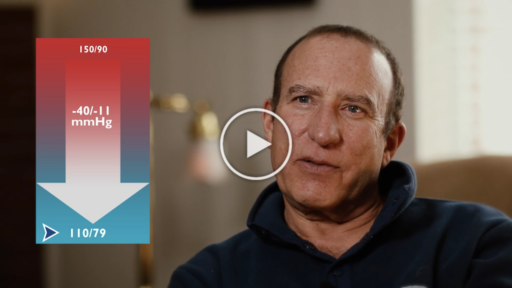
Watch How Mark Lowered His Blood Pressure Naturally.
It was 150/100, this morning it was 110/79

The Mediterranean diet includes
- generous servings of fruits and vegetables
- whole-grain breads and cereals
- very limited red meat
- moderate wine consumption (no more than two 5-ounce glasses a day for men and one a day for women)
- healthy fats from nuts, seeds, and olive oil.
Mediterranean-style eating can be part of a plan for reining in hypertension with nutrition. “The Mediterranean diet is not medically proven in the sense of lowering blood pressure by a specific number of points over two weeks, like the DASH diet,” Dr. Hauser says. “But there are lots of studies showing that people eating their traditional foods in the Mediterranean areas of the world have less heart disease and less high blood pressure.”
But don’t dash away from the DASH diet too soon. With planning and help from a checklist, you can make it work. “For people who are really serious, a consultation with a nutritionist can be a great help,” Dr. Bhatt says.


 Clinically proven





Comments
2 Replies to “Diet and Hypertension: What’s on Your Plate Matters!”
Thanks for this great info
Hi Marsha, Thank you for sharing. Kindest Regards, Eli.