
 Brian Fairchild
You already know that diet and exercise affect your blood pressure. But your sleep schedule? That one surprises most people.
A growing body of research shows that how long you sleep and how consistently you sleep matters as much as any pill or diet change. And the connection runs deeper than most people realize.
Here is what the science says and what you can do about it tonight.
Sleep duration and blood pressure: the U-shaped curve
Most people assume that more sleep is always better. The science is more nuanced.
A January 2026 study published in Frontiers in Public Health used wearable devices to track the sleep of 759 adults across nearly 1,500 nights. The findings showed a clear U-shaped pattern. Blood pressure was lowest when people slept between 7.6 and 7.7 hours per night. Sleeping too little or too much pushed blood pressure higher.
Participants who slept under six hours had more than double the hypertension risk of those sleeping around seven and a half hours. Those who logged more than eight hours also showed elevated risk.
Song H, et al. Frontiers in Public Health. 2026 Jan 12. PMC12833621.
This matches what large-scale reviews have found. A 2024 meta-analysis of more than one million adults confirmed that short sleep raised hypertension risk by 7 percent overall. When sleep dropped below five hours, that risk climbed to 11 percent. (PubMed 39008468)
The sweet spot for most adults: seven to eight hours per night.
It is not just how long you sleep. It is how consistently you sleep.
Here is something that catches almost everyone off guard: going to bed at different times each night may be just as harmful as not sleeping enough.
A 2023 study in the journal Hypertension analyzed more than two million nights of sleep data from adults worldwide. People with irregular sleep timing were significantly more likely to have high blood pressure than those who kept a consistent schedule. Night-to-night variation in both when you fall asleep and how long you sleep contributed independently to hypertension risk.
Scott H, Lechat B, et al. Hypertension. 2023 May;80(5):1117-1126. PubMed 36974682.
Think of it this way. Your cardiovascular system runs on a 24-hour clock. Irregular sleep disrupts that clock. It keeps your body in a low-grade stress response, which keeps blood pressure elevated even during hours when it should be recovering.
Going to bed and waking at roughly the same time every day is one of the simplest changes you can make for your heart.
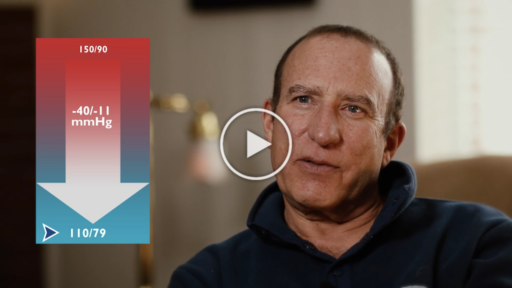
Watch How Mark Lowered His Blood Pressure Naturally.
It was 150/100, this morning it was 110/79
Why sleep affects blood pressure: the brainstem connection
The link between sleep and blood pressure is not random. It runs through your brainstem.
Your brainstem contains the neural circuits that regulate both breathing and blood pressure. During healthy sleep, slow and relaxed breathing activates these circuits and signals your body to lower blood pressure. During fragmented or shallow sleep, that signal gets interrupted.
Research published in Circulation Research in 2026 by researchers at the University of Auckland identified specific brainstem neurons that respond directly to breathing rhythm and help regulate cardiovascular output. When breathing is slow and steady, these neurons help keep blood pressure calm. When breathing is disrupted, whether by sleep apnea, stress, or shallow breathing, blood pressure climbs.
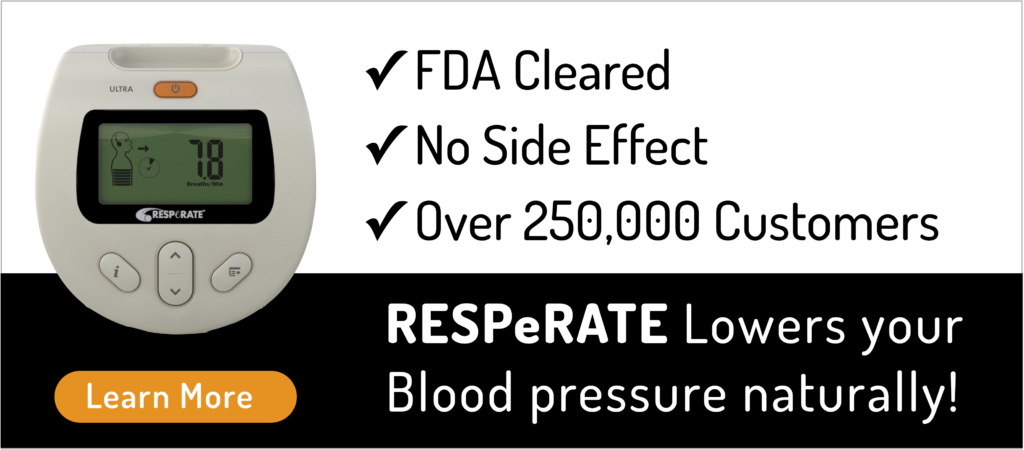
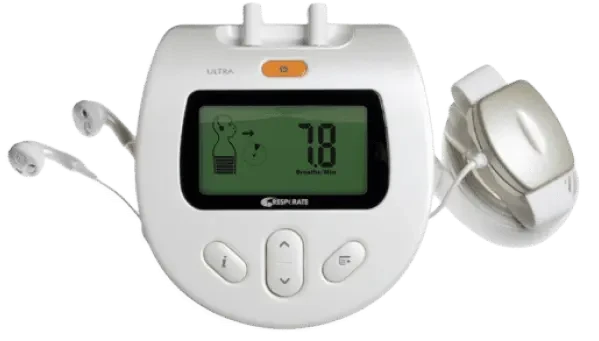
This is the same circuit that RESPeRATE targets. The device guides you through a slow breathing exercise designed to train this system. A daily 15-minute session helps shift your nervous system from a high-alert state into a calmer, blood-pressure-lowering mode.
The American Heart Association now counts sleep as essential
In 2022, the American Heart Association updated its Life’s Essential 8 framework to include sleep for the first time. The AHA now recommends seven to nine hours of quality sleep per night as a core pillar of heart health, alongside diet, exercise, blood pressure control, and not smoking.
This was a significant shift. Sleep was once treated as a lifestyle preference. It is now recognized as a clinical risk factor for cardiovascular disease.

Watch how Julie Lowered her Blood Pressure Naturally.
It was 170/110, this morning it was 120/80
Learn More

Five evidence-based sleep habits for lower blood pressure
You do not need a sleep clinic to improve your sleep. These five habits are backed by the research and free to start tonight.
- Keep a consistent bedtime. Going to bed and waking at the same time every day, including weekends, anchors your circadian rhythm and helps your cardiovascular system recover on schedule.
- Aim for 7 to 8 hours. Based on the wearable data from the 2026 Song study, the blood pressure sweet spot sits between 7.6 and 7.7 hours of actual sleep. More is not always better.
- Cool the room. A bedroom temperature between 65 and 68 degrees Fahrenheit supports deeper sleep and lowers nighttime cortisol.
- Cut caffeine by noon. Caffeine has a half-life of five to six hours. A 2 p.m. coffee can still be keeping your nervous system alert at midnight.
- Try slow breathing before bed. A 15-minute RESPeRATE session before sleep activates the same brainstem circuits that support healthy nighttime blood pressure dips. About 90 percent of RESPeRATE users report improved sleep quality as a secondary benefit.
How RESPeRATE fits into your sleep and blood pressure routine
RESPeRATE is the only FDA-cleared, non-drug device clinically shown to lower blood pressure. It works by guiding you through a personalized slow-breathing exercise that activates the vagus nerve and calms the sympathetic nervous system.
Most people use it in the evening, often before bed. The session does not just work on blood pressure directly. It trains your nervous system to shift out of the fight-or-flight state that keeps both blood pressure and sleep quality poor.
Backed by more than 50 clinical studies and used by more than 250,000 people, RESPeRATE is complementary to any medication your doctor has prescribed. It does not replace anything. It adds a non-drug tool to your daily routine.
Ready to try it?
If you manage blood pressure and want a drug-free, clinically backed tool to support both sleep quality and blood pressure, learn more about RESPeRATE here.

 Clinically proven

 Eli
Eli 




