
 Eli Ben-Yehuda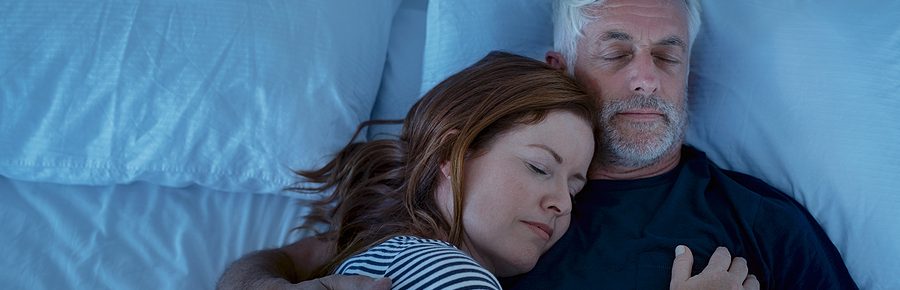
For many couples, sharing a bed feels natural—comforting, intimate, and emotionally reassuring. But when it comes to sleep quality, the question isn’t as simple as it seems. Do couples actually sleep better together, or is the idea more romantic myth than scientific reality?
From snoring and tossing to mismatched sleep schedules, sharing a bed can introduce challenges that disrupt rest. At the same time, sleeping next to a partner may reduce stress, increase feelings of safety, and even promote deeper sleep for some people. These opposing experiences leave many couples wondering whether togetherness helps or hinders a good night’s rest.
By looking at sleep research, relationship dynamics, and individual sleep needs, we can begin to uncover the truth behind shared sleep. Understanding how sleeping together affects the body and mind can help couples make informed choices that support both their relationship and their health.
Case In Point
They learned about each other’s sleep problems by accident. They were having a cookout with three families not long ago, and the children were off playing by themselves. The couples sat down for an adult conversation that might otherwise have turned to Hollywood, parenting or Donald Trump, when suddenly one of the women announced she had a confession: She never got to see her husband.
She said she collapsed into bed soon after the children went to sleep, then woke up wired at 4:30 a.m., anxious about work deadlines. He came home late from his job, played with the children for a time, then went to bed after 11 p.m.

Instead of finding this situation unusual, every other person at the table had a similar story. One spouse liked to meditate in the morning, another liked to binge-watch television at night; one liked reading when the house quieted down after midnight, another liked making coffee before the house got chaotic at dawn.
Opposite Sleep Schedules
One thing they all had in common is that they had radically incompatible sleep schedules with their spouses. Another is that they weren’t sure whether this was good or bad for their relationship.
In recent years, a consensus has emerged that sleep is a critical health issue, but researchers have largely focused on individual behavior.
One area that has lagged behind is what researchers calls dyadic sleep, or sleep concordance. Sixty percent of people sleep with another person. When one person has sleep issues, both can suffer.
Sleep Disorders
Certain sleep disorders, like snoring, have been shown to reduce the quality of relationships, largely because the person hearing the snoring experiences disrupted sleep. Women living with snorers, for instance, are three times as likely to report sleep problems themselves. Insomnia has also been linked to lower relationship satisfaction.
Research into couples’ sleeping patterns reveals a curious dynamic. When objective measures like brain waves or eye movements are examined, people are found to generally sleep better when they sleep by themselves than when they sleep with a bed partner.
Yet when they’re asked about sleeping alone, people say they are less satisfied.

Watch How Mark Lowered His Blood Pressure Naturally.
It was 150/100, this morning it was 110/79

Times Have Changed
A chief impediment to sleeping together is different preferences for what time to go to bed. As early as the 1970s, researchers began looking at the distinction between morning people and night people, often referred to as “larks” or “owls.”
Invented in 1976, the Morningness-Eveningness Questionnaire became a popular self-assessment that uses 19 questions to help determine what time of day a person’s alertness peaks.
More recent research has shown the variance is largely determined by genetics, with some input from age and gender.
Till Roenneberg, a professor of chronobiology at Ludwig-Maximilian University in Munich, studies the biological roots of sleep. He told me that each person has a sleep chronotype, an internal timing profile that is specific to that individual and can vary up to 12 hours with others.
When I asked how many different chronotypes there are, he likened them to foot size and fingerprints, meaning there is an infinite number because everyone is unique.
Instead of dividing ourselves into owls and larks, he stressed, we should be speaking of an owl-lark spectrum.
Mr. Roenneberg says the best way to determine your chronotype is to identify your preferred midpoint of sleep. To do that, calculate your average sleep duration, divide the number in two, then add the outcome to your average bedtime on free days.
In Closing
So, do couples actually sleep better together? The answer depends largely on the individuals involved. While some partners benefit from emotional closeness and synchronized sleep patterns, others may find their rest compromised by movement, noise, or differing routines.
The key lies in communication and flexibility. Couples who openly discuss their sleep preferences and challenges are more likely to find solutions—whether that means adjusting bedtime habits, investing in sleep-friendly bedding, or even embracing separate sleep spaces when needed. Prioritizing sleep doesn’t have to come at the expense of intimacy.
Ultimately, quality sleep is deeply personal, and there’s no one-size-fits-all approach. Whether sleeping together strengthens your rest or disrupts it, the healthiest choice is the one that helps both partners wake up feeling refreshed, connected, and well-rested.


 Clinically proven


 Brian
Brian 



Comments