
 Brian Fairchild
Dr. Berg talks about the symptoms of high cortisol versus low cortisol. Your adrenals might start out with high cortisol due to stress, then trigger the cell receptors to downgrade and develop cortisol receptor resistance or glucocorticoid receptor resistance. This makes the adrenal make more cortisol. This could lead to chronic fatigue, chronic inflammation, low-stress tolerance, high blood pressure, blood sugar problems, high cholesterol, and belly fat.
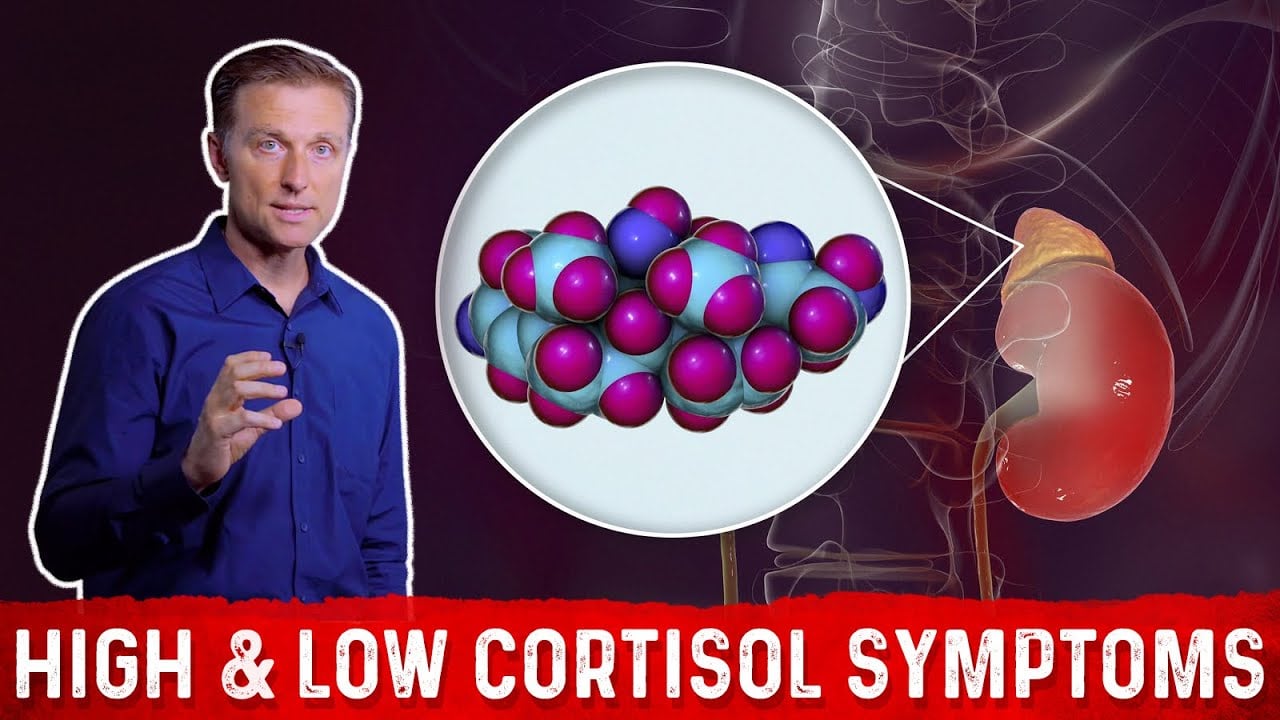
Cortisol is a steroid hormone, one of the glucocorticoids, made in the cortex of the adrenal glands and then released into the blood. Blood transports it all around the body. Almost every cell contains receptors for cortisol and so cortisol can have lots of different actions depending on which sort of cells it is acting upon.
These effects include controlling the body’s blood sugar levels and thus regulating metabolism, acting as an anti-inflammatory, influencing memory formation, controlling salt and water balance, influencing blood pressure and helping the development of the fetus. In many species, cortisol is also responsible for triggering the processes involved in giving birth.
The Effects of To Much Cortisol
Too much cortisol over a prolonged period of time can lead to a condition called Cushing’s syndrome. This can be caused by a wide range of factors, such as a tumor that produces adrenocorticotropic hormone (and therefore increases cortisol secretion), or taking certain types of drugs.

Watch How Mark Lowered His Blood Pressure Naturally.
It was 150/100, this morning it was 110/79
The symptoms include:
- Rapid weight gain mainly in the face, chest, and abdomen contrasted with slender arms and legs.
- A flushed and round face
- High blood pressure
- Osteoporosis
- Skin changes (bruises and purple stretch marks)
- Muscle weakness
- Mood swings, which show as anxiety, depression or irritability
- Increased thirst and frequency of urination.
High cortisol levels over a prolonged time can also cause a lack of sex drive and, in women, periods can become irregular, less frequent or stop altogether (amenorrhoea).
In addition, there has been a long-standing association between raised or impaired regulation of cortisol levels and a number of psychiatric conditions such as anxiety and depression. However, the significance of this is not yet clearly understood.
The Effects of Too Little Cortisol
Cortisol can also run too low. When the adrenal glands fail to produce enough cortisol, the result is a condition called Addison’s disease, also known as primary adrenal insufficiency. This happens when the adrenal glands themselves are damaged, most often by an autoimmune process, and can no longer produce adequate cortisol or aldosterone, the hormone that helps regulate sodium, potassium, and blood pressure.
According to Johns Hopkins Medicine, adrenal insufficiency can be primary, originating in the adrenal glands themselves, or secondary, caused by the pituitary gland failing to produce enough ACTH, the hormone that signals the adrenals to release cortisol.
Symptoms Include:
- Chronic fatigue and muscle weakness
- Unintended weight loss and reduced appetite
- Low blood pressure, which can cause dizziness or fainting, especially when standing
- Salt cravings, caused by the loss of aldosterone’s sodium-regulating effect
- Darkening of the skin, particularly on scars, skin folds, and pressure points
- Nausea, vomiting, or abdominal pain
- Mood changes, including irritability or depression
The blood pressure connection here runs in the opposite direction from Cushing’s syndrome. Where high cortisol contributes to elevated blood pressure, low cortisol and the accompanying drop in aldosterone can cause blood pressure to fall too low, sometimes dramatically, particularly when standing up.
In rare cases, a sudden, severe drop in cortisol can trigger an adrenal crisis, a medical emergency marked by very low blood pressure, vomiting, and loss of consciousness. This requires immediate medical attention.

Watch how Julie Lowered her Blood Pressure Naturally.
It was 170/110, this morning it was 120/80
Learn More

Why Cortisol Balance Matters for Blood Pressure
For most people, the more common scenario is not Cushing’s syndrome or Addison’s disease, both genuinely rare endocrine disorders, but the everyday cortisol elevation that comes from chronic stress. Persistently high stress keeps cortisol elevated without crossing into Cushing’s syndrome territory, yet it still contributes meaningfully to elevated blood pressure over time. For more on how the adrenal stress response connects to blood pressure day to day, see our discussion of panic attacks and high blood pressure.
If you suspect your cortisol levels may be too high or too low, the only way to know for certain is blood, urine, or saliva testing ordered by a physician. Cortisol naturally fluctuates throughout the day, so self-diagnosing from symptoms alone is not reliable.

 Clinically proven

 Eli
Eli 




