
 Brian Fairchild
CoQ10 heart health has been circulating in wellness conversations for years. Yet most people still have only a vague idea of what CoQ10 actually is. They know it sounds important. They have seen it on supplement shelves next to fish oil and vitamin D. And they have probably heard someone mention it in connection with heart medication side effects.
Here is the honest version: CoQ10 is a compound your body makes naturally, and it is genuinely important. It sits at the center of how every cell in your body generates energy. Your heart, which never gets a day off, depends on it more than almost any other organ. The evidence that it matters for cardiovascular health has grown meaningfully over the past decade.
This post goes deeper on CoQ10 than our Top 5 Supplements for Heart Health overview had room to do. If you want the broader picture of evidence-backed supplements, start there. If you want the full CoQ10 story, you are in the right place.
What Is CoQ10, and What Does It Actually Do?
CoQ10 stands for Coenzyme Q10. The name is more intimidating than the idea. A coenzyme is simply a helper molecule that assists enzymes in doing their jobs. CoQ10 lives primarily inside your mitochondria, the tiny structures inside every cell that convert food into usable energy.
Think of mitochondria as the power stations of your cells. CoQ10 is part of the assembly line inside those power stations. It shuttles electrons through chemical reactions that produce ATP, the fuel your cells run on. Without enough CoQ10, that process slows down. Your cells get less energy. No organ feels that more acutely than the heart. It contracts around 100,000 times per day without pause.
Beyond energy production, CoQ10 is also a fat-soluble antioxidant. It protects cell membranes from oxidative damage. That wear accumulates over time and contributes to cardiovascular disease, arterial stiffness, and aging.
The NIH notes that CoQ10 can increase the production of superoxide dismutase, an enzyme that reduces vascular oxidative stress in people with hypertension. It also preserves nitric oxide, the compound your blood vessels depend on to dilate and maintain healthy pressure.
Why Your CoQ10 Levels Fall Over Time
Here is the part most people do not know. Your body produces its own CoQ10, but not at the same rate throughout your life. Production peaks in your mid-twenties and then declines steadily. By your mid-sixties, some estimates suggest your body produces roughly half what it did at its peak.
That decline matters more for some people than others. Three groups tend to see the steepest drops.
People who are getting older
The enzymes that make CoQ10 become less efficient with age. Meanwhile, the heart and other organs become more dependent on it to function well. This is why CoQ10 research tends to show the strongest effects in older adults and in people with cardiovascular conditions.
People on statin therapy
This is the CoQ10 connection most people have heard of, and the biology behind it is solid. Statins block a specific step in the mevalonate pathway. That is the reaction chain the liver uses to produce cholesterol. The problem is that the same pathway also produces CoQ10. Block the pathway, and you reduce cholesterol production. But you also reduce CoQ10 synthesis.
Statin therapy can significantly reduce circulating CoQ10 levels. Muscle tissue depends heavily on CoQ10 for energy. This is a leading theory for why statin-associated muscle pain occurs. It affects between five and twenty percent of statin users. The heart is a muscle too. That is why statins, CoQ10, and cardiovascular outcomes have attracted so much research attention.
Always speak with your doctor before adjusting any medication or adding supplements to your routine, particularly if you take statins.
People with heart disease or heart failure
Multiple studies have found CoQ10 levels measurably lower in heart failure patients than in healthy controls. The lower the CoQ10, the more severe the heart failure tends to be. Whether depleted CoQ10 drives heart failure or results from it is still debated. The association, however, is well-established.
The Mayo Clinic’s overview of CoQ10 confirms that people with certain conditions including heart disease may have lower CoQ10 levels, and that supplementation may be appropriate in some cases with physician guidance.
It was 150/100, this morning it was 110/79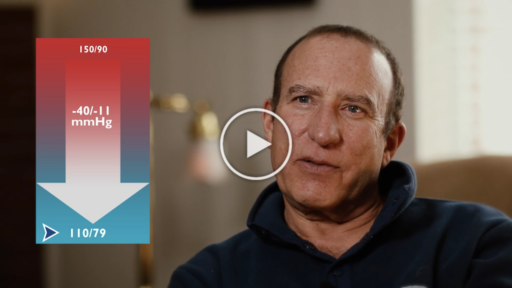
Watch How Mark Lowered His Blood Pressure Naturally.
Dr. Eric Berg is one of YouTube’s most-followed health educators, with over 13 million subscribers and a focus on nutrition, wellness, and preventive health. His plain-language overview of CoQ10 is a useful primer before diving into the clinical evidence below.

What the Clinical Evidence Actually Shows
Let us be direct. Some of this science is strong. Some is promising but not settled. Some is still developing. CoQ10 has more clinical research behind it than most supplements. It also has studies that contradict each other. That is worth being honest about.
Blood pressure: a consistent, modest effect
The most rigorous recent analysis is a 2025 meta-analysis of 45 randomized controlled trials. It covered 2,932 adults and was published in the International Journal of Cardiology. The pooled analysis found that CoQ10 significantly reduced systolic blood pressure by 3.44 mmHg. The effect was greatest at doses under 200 mg per day and with supplementation lasting over eight weeks. Diastolic blood pressure did not show a statistically significant change.
An earlier Advances in Nutrition meta-analysis found a 4.77 mmHg systolic reduction in people with cardiometabolic disorders. That is a more targeted population, and the effect size is more meaningful.
A 3 to 5 mmHg reduction in systolic blood pressure is not dramatic on its own. But layered on top of diet changes, exercise, and other non-drug approaches, it contributes to a meaningful cumulative picture.
| Study | Key Finding |
|---|---|
| Alinejad-Mofrad et al. 2025 — 45 RCTs, 2,932 adults | SBP -3.44 mmHg; greatest effect at <200 mg/day and >8 weeks |
| Zhao et al. 2022 — GRADE meta-analysis | SBP -4.77 mmHg in cardiometabolic patients |
| 2025 RCT — 120 heart failure patients, 6 months | Improved heart function, blood pressure, and walk distance vs placebo |
| Q-SYMBIO Trial (Mortensen et al. 2014) | Two-year composite CVD endpoint reduced by nearly half vs placebo |
Heart failure: the Q-SYMBIO trial
The most compelling clinical evidence for CoQ10 comes from heart failure research. The Q-SYMBIO trial, published in JACC Heart Failure in 2014, remains the landmark study in this space.
It was a randomized, double-blind, placebo-controlled trial across multiple countries. Patients with chronic heart failure took either CoQ10 at 100 mg three times daily or a placebo for two years. The CoQ10 group saw the two-year composite endpoint of cardiovascular death, hospitalizations, and need for mechanical support or transplant reduced by nearly half compared to the placebo group.
A 2025 RCT of 120 heart failure patients on CoQ10 120 mg daily for six months reinforced these results. Heart function, blood pressure, and walk distance all improved significantly versus placebo.
A January 2026 PubMed review concluded that CoQ10 meets the criteria for a conditionally essential nutrient in heart failure.
Mortensen SA et al. Q-SYMBIO Trial, JACC Heart Failure 2014. View on JACC
2026 PubMed review: CoQ10 in Cardiovascular Disease Treatment. View on PubMed
Statin muscle pain: mixed but encouraging
The connection between CoQ10 and statin-associated muscle symptoms is where the evidence is most mixed and most discussed. The biology is plausible. Statins reduce CoQ10 synthesis. Muscle cells depend on CoQ10 for energy. And muscle pain is the most common statin side effect.
A 2024 meta-analysis of seven RCTs with 389 statin patients found that four trials showed significant muscle pain reductions with CoQ10. Three showed no significant change. The overall pooled analysis found a statistically significant reduction in pain intensity.
That is an encouraging result, though not a definitive one. If you are on statins and experiencing muscle discomfort, it is a reasonable conversation to have with your doctor.
Meta-analysis of CoQ10 for statin muscle symptoms, 7 RCTs, 389 patients. PMC 2025. View on PMC
It was 170/110, this morning it was 120/80
Watch how Julie Lowered her Blood Pressure Naturally.


Ubiquinol vs. Ubiquinone: Which Form Should You Take?
If you have shopped for CoQ10, you have likely seen two labels: one says CoQ10, one says ubiquinol. They are both CoQ10. The difference is in the form.
Ubiquinone is the oxidized form. Ubiquinol is the reduced form. It carries two extra hydrogen atoms and is how CoQ10 circulates in your blood. More than ninety percent of CoQ10 in your bloodstream at any given moment is in the ubiquinol form.
Your body can convert ubiquinone to ubiquinol, and it does this efficiently when you are younger. As you age, that conversion becomes less reliable. By your mid-sixties, the conversion efficiency has measurably declined for many people. This is why ubiquinol tends to be recommended for older adults and for people with significant cardiovascular conditions.
For most healthy adults under fifty, a quality ubiquinone softgel is effective and considerably cheaper. The more important variable is not ubiquinol versus ubiquinone but whether the supplement is in a softgel with fat, since CoQ10 is fat-soluble and absorbs very poorly without it.
Take CoQ10 with a meal that contains fat: a handful of nuts, a piece of salmon, olive oil on your salad. Fat is required for absorption. Powder capsules taken on an empty stomach may absorb as little as two to three percent of the stated dose. A softgel with oils taken with food is dramatically more effective.
Quality ubiquinone softgels at 100 to 200 mg daily were used in virtually all the major clinical trials, including Q-SYMBIO. You do not necessarily need to pay the premium for ubiquinol unless your doctor specifically recommends it.
CoQ10 can cause insomnia in some people if taken late in the day. Take it with breakfast or lunch, not in the evening.
A Few Honest Caveats Before You Start
CoQ10 has an excellent safety profile. Trials have tested it at doses up to 1,200 mg per day without significant adverse effects. At 100 to 300 mg per day, side effects are rare. When they occur, they are mild, usually limited to some nausea or digestive discomfort.
That said, a few situations call for a conversation with your physician before starting.
If you take blood thinners
CoQ10 may modestly reduce the effectiveness of warfarin. If your doctor monitors your INR levels, they should know you are taking CoQ10 so they can adjust accordingly.
If you take blood pressure medication
CoQ10 may have an additive effect on blood pressure lowering. That is generally a good thing. But if you already take antihypertensive medication, your doctor should know. They may need to monitor your readings or adjust your plan.
If you are pregnant or nursing
There is insufficient research on CoQ10 supplementation during pregnancy. Skip it unless specifically directed by your obstetrician.
Beyond those three situations, CoQ10 is considered very safe and is available over the counter at most pharmacies. The Mayo Clinic, Cleveland Clinic, and NIH all note it as generally well tolerated at standard doses.
How CoQ10 Fits Into a Broader Heart Health Approach
CoQ10 is not a replacement for a treatment plan. It works best when it is one thread in a larger fabric of heart-healthy choices.
That fabric looks different for everyone. But the consistently supported elements include a potassium-rich diet, regular physical activity, quality sleep, and stress management. For many people, it also includes a tool that addresses the nervous system overdrive driving cardiovascular risk.
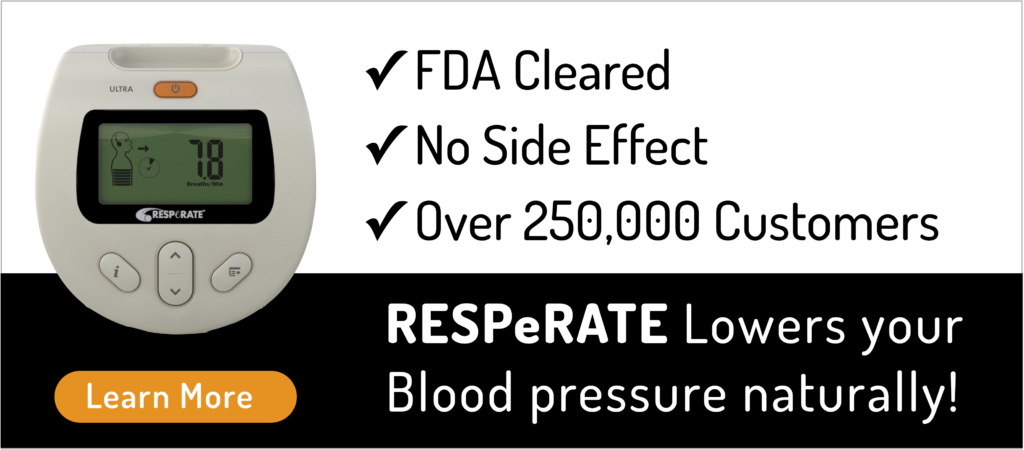
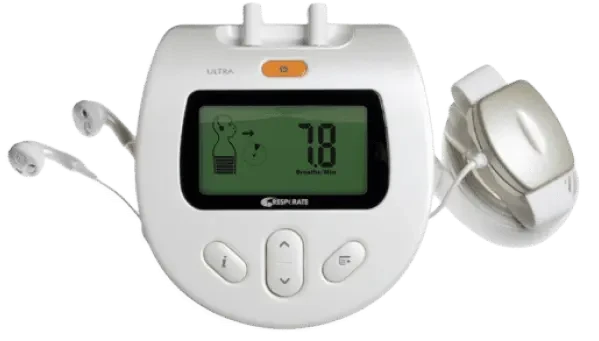
RESPeRATE is the only FDA-cleared device designed to lower blood pressure naturally. It delivers fifteen minutes of device-guided slow breathing daily, calming the sympathetic nervous system activity that keeps blood pressure elevated. The two approaches are not competing. They work on different parts of the same problem.
You can read more about the clinical evidence behind RESPeRATE on our clinical proof page. And if you are exploring supplements more broadly, our
Summary
CoQ10 heart health is not marketing language. It reflects a real biological relationship: a compound your body already makes, your heart’s energy demands, and a growing base of peer-reviewed evidence.
The case is strongest for three groups. People over fifty whose CoQ10 production has declined. People on statins whose CoQ10 synthesis may be reduced. And people with heart failure who consistently show depleted CoQ10 levels. For these groups, 100 to 300 mg daily in a softgel, taken with food, is a low-risk, evidence-supported addition to a physician-directed plan.
For the rest of us, CoQ10 is a reasonable insurance policy. Your heart works harder than any other organ you have. Supporting the cellular machinery it depends on is not a complicated idea. It is just good maintenance.
As always, RESPeRATE works best as part of your overall health program alongside your physician-directed treatment plan. So does CoQ10. They are not shortcuts. They are building blocks.
Ready to add clinically supported tools to your heart health routine? Explore RESPeRATE today and use it as part of your overall health program, alongside your physician-directed treatment plan.

 Clinically proven

 Eli
Eli 




