
 Brian Fairchild
Aldosterone and hypertension in women is a more specific and more clinically important story than most blood pressure content acknowledges. During reproductive years, women have lower rates of hypertension than men. That advantage disappears after menopause, and aldosterone is a central reason why. Understanding why that shift happens matters for any woman whose blood pressure has become harder to control with age. It also matters for anyone whose blood pressure does not respond well to standard medications.
For a broader overview of hormone-driven high blood pressure and the 2025 Endocrine Society screening guidelines, see our post on endocrine hypertension.
It was 150/100, this morning it was 110/79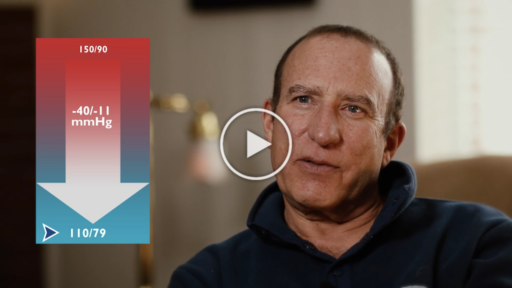
Watch How Mark Lowered His Blood Pressure Naturally.
How Aldosterone Controls Blood Pressure
Aldosterone is a hormone produced in the outer layer of the adrenal glands, which sit above the kidneys. Its primary job is to regulate blood pressure by controlling sodium and fluid balance. When aldosterone levels are high, the kidneys hold onto more sodium. More sodium means more fluid in the bloodstream. More fluid means higher blood pressure.
The renin-angiotensin-aldosterone system, or RAAS, governs this process. Renin triggers a cascade that produces angiotensin II, which in turn stimulates aldosterone release. When blood pressure normalizes, the system dials back. When something disrupts that feedback, aldosterone stays elevated and blood pressure stays up.
For most people, this is background physiology. For women, it is something more specific. Aldosterone is naturally more abundant in women than in men. Furthermore, the hormonal changes of menopause remove two biological brakes that had been keeping aldosterone in check.
Why Menopause Changes Everything
Estrogen — the first brake
Estrogen actively suppresses aldosterone production through receptors in the adrenal glands. During reproductive years, this suppression helps keep blood pressure lower in women than in age-matched men. A 2024 review in Cardiovascular Endocrinology and Metabolism confirmed that estrogen mediates aldosterone biosynthesis through classical estrogen receptors and G protein-coupled receptors in the adrenal gland. Research also confirms that menopause increases aldosterone levels and that estrogen treatment reverses that increase. The implication is direct: when estrogen drops at menopause, aldosterone production rises, and blood pressure follows.
Progesterone — the second brake
Progesterone is the less well-known hormonal protector. It competes with aldosterone for the same receptor sites in the kidney. While progesterone occupies those receptors, aldosterone cannot fully activate them. After menopause, progesterone levels fall sharply. According to a 2026 review in Drugs, the loss of this antagonistic effect results in unopposed mineralocorticoid receptor activation, enhanced renal sodium reabsorption, increased blood volume, and heightened salt-sensitive hypertension. This mechanism is distinct from estrogen loss. Together, both hormonal changes make post-menopausal women significantly more vulnerable to aldosterone-driven blood pressure problems.
Salt Sensitivity — A Consequence Most Women Are Not Told About
One concrete consequence of this hormonal shift is salt sensitivity. Research has found that women show roughly 30 percent higher salt sensitivity of blood pressure than men, regardless of menopausal status. A 2023 review in PMC found that the aldosterone-mineralocorticoid receptor axis in the kidney responds differently in women, with the endothelial sodium channel playing a central role in this sex-specific effect. This makes dietary sodium a more powerful blood pressure lever for women than for men.
This matters practically. A woman switching to a low-sodium diet may see a larger blood pressure improvement than a male counterpart making the same change. It also means that standard blood pressure treatment may underperform in women. Historically, most treatment protocols were developed in male populations. They do not fully account for the aldosterone-kidney dynamic that is more active in female physiology. For more on how dietary choices affect blood pressure, see our article on borderline hypertension, which covers the DASH diet and sodium reduction evidence.
Obesity and type 2 diabetes amplify the problem further. Both conditions can cause aldosterone levels to rise significantly, compounding the post-menopausal hormonal shift. A post-menopausal woman who has also developed insulin resistance or excess weight therefore carries substantially higher risk of aldosterone-driven hypertension than her blood pressure numbers alone might suggest.
It was 170/110, this morning it was 120/80
Watch how Julie Lowered her Blood Pressure Naturally.


Which Blood Test to Ask For
One of the reader questions on the original version of this post asked which blood test would most accurately identify aldosterone as a blood pressure driver. The answer is the aldosterone-renin ratio, commonly called the ARR. This is a blood test that measures both aldosterone and renin levels and calculates their ratio. A high aldosterone level alongside a suppressed renin level is the signature pattern of primary aldosteronism.
The 2025 Endocrine Society Clinical Practice Guideline now recommends the ARR as the first-choice screening test for all people with high blood pressure. For women with treatment-resistant hypertension or blood pressure that worsened after menopause, asking for this test is a specific and reasonable step. For context on how this guideline changed screening recommendations, see our post on endocrine hypertension.
Several warning signs make the conversation with a physician more urgent. Blood pressure that stays high despite three or more medications, including a diuretic, is one signal. Blood pressure that was well-controlled and became suddenly harder to manage around menopause is another. Low potassium on routine blood tests, even without taking supplements, is a third.
Why Treatment Choice Matters Differently for Women
When primary aldosteronism is confirmed, treatment options differ by whether one or both adrenal glands are overproducing. A single overactive gland often responds to surgery. Blood pressure frequently normalizes afterward. Bilateral involvement requires medications that block the mineralocorticoid receptor. Two drugs dominate this category: spironolactone and eplerenone. Both work, but they are not equivalent for women.
Spironolactone has a longer track record and is less expensive. However, it also binds to progesterone and androgen receptors alongside the mineralocorticoid receptor. In women, this can cause menstrual irregularities and breast tenderness. Furthermore, a five-year study of 415 women with bilateral primary aldosteronism, published in AHA Hypertension, found that spironolactone use was linked to a greater annual decline in kidney function than eplerenone over the same period. That finding makes it worth discussing specifically with a physician when choosing between the two.
Eplerenone is more selective for the mineralocorticoid receptor. It has fewer hormonal side effects and may be the better long-term choice for many women in this situation. A newer nonsteroidal option, finerenone, has gained attention for its cardiovascular and kidney-protective effects. Its role in primary aldosteronism is still under study, but it represents an evolving treatment landscape worth following.
For a broader look at how hypertension presents differently in women, see our article on high blood pressure in menopausal women.
Where RESPeRATE Fits
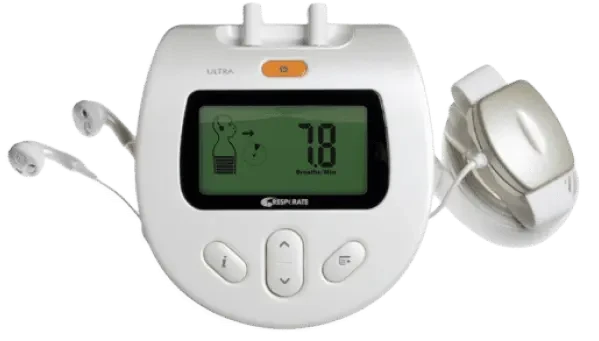
RESPeRATE works alongside a physician-directed treatment plan. For women with aldosterone-driven blood pressure, addressing the hormonal root cause is the primary clinical goal. While that workup and treatment plan unfolds, the sympathetic nervous system remains an active contributor to elevated blood pressure. RESPeRATE guides slow breathing with a longer exhale. This approach calms the sympathetic nervous system and reduces the neural pressure on blood vessel walls. It is the only FDA-cleared non-drug device clinically proven to lower blood pressure. It carries no drug interactions and no side effects. Use it as part of your overall health program alongside your physician-directed treatment plan. Review the full evidence at our clinical proof page.
Summary
Aldosterone plays a uniquely significant role in blood pressure across a woman’s lifespan. Estrogen suppresses its production during reproductive years. Progesterone blocks its receptor activity. When both hormones decline at menopause, aldosterone rises unchecked. Blood pressure follows, and women also experience greater salt sensitivity through the same aldosterone-kidney pathway.
The aldosterone-renin ratio blood test is the recommended first-choice screening tool. It is worth asking about when blood pressure has become difficult to control, particularly around or after menopause.

 Clinically proven

 Eli
Eli 





Comments
3 Replies to “Aldosterone and Hypertension in Women: What Every Woman With High Blood Pressure Should Know”
I think aldosterone levels will affect both genders. I myself was diagnosed with low renin and aldosterone which was part of adrenal insufficiency. This scenario=low blood pressure and usually involves low cortisol and DHEA.
I read with interest your article on aldosterone levels affecting hypertension. My question is, what blood test, specifically, will give the most accurate reading of aldosterone levels to determine if this is contributing to hypertension?
Hi Jan, That would be up to your physician. I would not know what specific test they use. Kindest Regards, Eli, Content Manager. RESPeRATE.