
 Brian Fairchild
Most people think of blood pressure as a daytime problem. You take your reading in the morning, track it between meals, and adjust your lifestyle or medications accordingly. But the cardiovascular system does not take a break at bedtime. What happens during those minutes or hours when you are lying in the dark, unable to fall asleep, matters more than most people realize.
This is the fourth post in a five-part series on sleep and blood pressure. The first post covered the nightly blood pressure dip and what happens when it fails. The second explained why deep sleep is essential for cardiovascular repair. The third looked at blood pressure surges during REM sleep. This post focuses on Stage 1 sleep, the transition between wakefulness and sleep, and what the research says about chronic difficulty falling asleep and long-term blood pressure risk. For background on the sleep stages themselves, see our overview of the 5 stages of sleep.
It was 150/100, this morning it was 110/79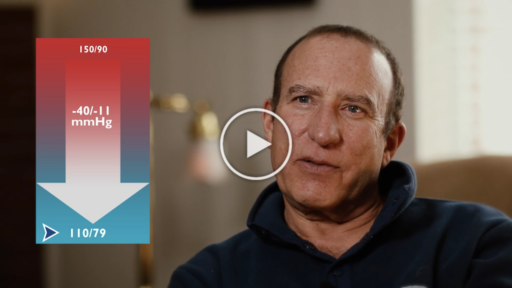
Watch How Mark Lowered His Blood Pressure Naturally.
What Stage 1 sleep is and why the transition matters
Stage 1 is the lightest phase of sleep, the doorway between being awake and being asleep. It typically lasts only one to seven minutes in healthy adults. During this phase, your heart rate begins to slow, your muscles relax, and your blood pressure starts its overnight decline. Your body is downshifting from the alert, high-output state it maintained during the day.
When you cannot fall asleep, you stay stuck at the threshold. Your brain remains partially alert. Your sympathetic nervous system, the one that drives fight-or-flight responses, keeps firing. Blood vessels stay constricted. Heart rate stays elevated. The blood pressure drop that should begin as you transition into sleep is delayed or prevented entirely.
For a single restless night, the effect is temporary. For people with chronic insomnia, a condition defined as persistent difficulty falling or staying asleep at least three nights per week for three months or longer, that nightly delay accumulates into something more serious. Addressing the root causes of insomnia, rather than just the symptom, is often the more effective path toward lasting relief.
What chronic insomnia does to your blood pressure over time
The relationship between insomnia and hypertension has been confirmed in several long-term population studies. One of the most rigorous was conducted using the Penn State Adult Cohort. Researchers followed nearly 800 adults who did not have hypertension at baseline for 7.5 years. People with chronic insomnia and objectively short sleep duration had roughly three times the risk of developing hypertension compared to people who slept normally. The effect was independent of other cardiovascular risk factors including obesity, smoking, and sleep apnea.
The same cohort was followed for nearly a decade in a 2024 update. Insomnia with objective short sleep duration was independently associated with incident cardiovascular and cerebrovascular disease. Again, the relationship held after adjusting for confounders.
A broader 2025 review from the American College of Cardiology summarized the longitudinal data: insomnia and fragmented sleep increased the risk of new-onset hypertension by approximately 21 percent. That figure reflects consistent findings across multiple studies and populations.
The mechanism: why lying awake raises blood pressure
The connection is not coincidental. It runs through the sympathetic nervous system. Research published in SLEEP journal found that people with chronic insomnia showed elevated sympathetic nerve activity, blunted baroreflex function, and heightened cardiovascular reactivity to stress compared to healthy sleepers. The baroreflex is the feedback loop that keeps blood pressure from rising too high. When it is impaired, small stressors produce larger and longer-lasting blood pressure spikes.
The stress hormone connection reinforces this picture. Research on the hypothalamic-pituitary-adrenal axis, reviewed by the NIH, shows that insomnia is associated with a 24-hour elevation in cortisol and ACTH secretion. This is consistent with a state of physiological hyperarousal, where the body behaves as if it needs to stay alert even during hours that should be devoted to rest and repair. Cortisol raises blood pressure directly by promoting sodium retention and vasoconstriction.
This is also why anxiety and blood pressure are so closely linked. The mental and physical components of lying awake feed each other. Worry activates the sympathetic system. The sympathetic system raises heart rate and blood pressure. A racing heart makes it harder to fall asleep. The cycle continues until something interrupts it. Breaking that cycle starts with understanding the full range of factors capable of keeping you awake in the first place.
It was 170/110, this morning it was 120/80
Watch how Julie Lowered her Blood Pressure Naturally.


Not all insomnia carries the same risk
The research makes an important distinction. People who report feeling like they cannot sleep but whose sleep studies show normal or near-normal sleep duration carry a lower cardiovascular risk than people who both report insomnia and show objectively short sleep duration in a sleep lab. The combination of subjective complaint and objective sleep loss is what drives the risk higher.
This means a person who spends eight hours in bed but genuinely sleeps only five or six may face a meaningfully different risk profile than someone who feels like a poor sleeper but logs seven hours. It also means that if you have been managing high blood pressure and consistently struggling to fall asleep, that sleep problem is worth treating as a cardiovascular issue, not only a quality-of-life complaint.
What this means in practice
Chronic difficulty falling asleep is not just uncomfortable. It is a sustained physiological stressor that keeps your nervous system activated, elevates cortisol, impairs your baroreflex, and delays the blood pressure drop your cardiovascular system depends on every night.
Sleep hygiene practices address part of the problem. Consistent bedtime and wake time, a cool and dark room, reduced screen exposure in the evening, and limiting caffeine after midday all support the Stage 1 transition.
Caffeine deserves particular attention here, since even a dose taken hours before bed can measurably disrupt sleep without you realizing it.
Cognitive behavioral therapy for insomnia, known as CBT-I, has the strongest clinical evidence for chronic insomnia and is now recommended as a first-line treatment before sleep medications by the American Academy of Sleep Medicine. Mindfulness-based approaches have also shown promise as a complement to standard treatment, with one randomized study finding measurable improvements in objective sleep outcomes.
Treating underlying anxiety is also directly relevant. If anxiety is what keeps you lying awake, addressing it is not a soft recommendation. It is a blood pressure intervention.
Sleep onset is only the beginning of the story. To understand what happens once you cross into stable sleep, see our post on Stage 2 sleep and blood pressure
Where RESPeRATE fits
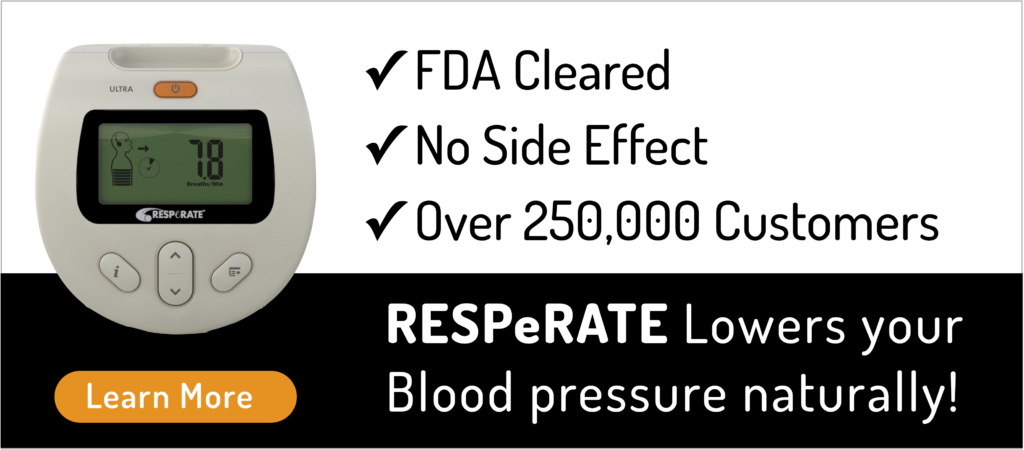
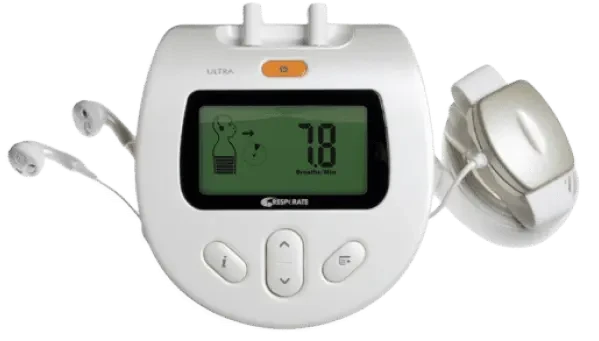
RESPeRATE works by guiding users through a daily 15-minute session of slow, device-guided breathing that slows the breath rate to fewer than 10 breaths per minute. That breathing pattern calms sympathetic nervous system activity, which is the same pathway that lying awake dysregulates. In more than 50 clinical studies and with 250,000 users, RESPeRATE has been shown to lower blood pressure as a complement to physician-directed treatment. For more on how it works, see How It Works and Clinical Proof.
Many users also report improved sleep as a secondary benefit of their regular practice. While RESPeRATE is indicated for blood pressure reduction and is not a sleep device, calming the sympathetic nervous system before bed creates conditions that support falling asleep more easily. That overlap matters for people managing both blood pressure and chronic difficulty with sleep onset.

 Clinically proven

 Eli
Eli 





Comments