
 Brian Fairchild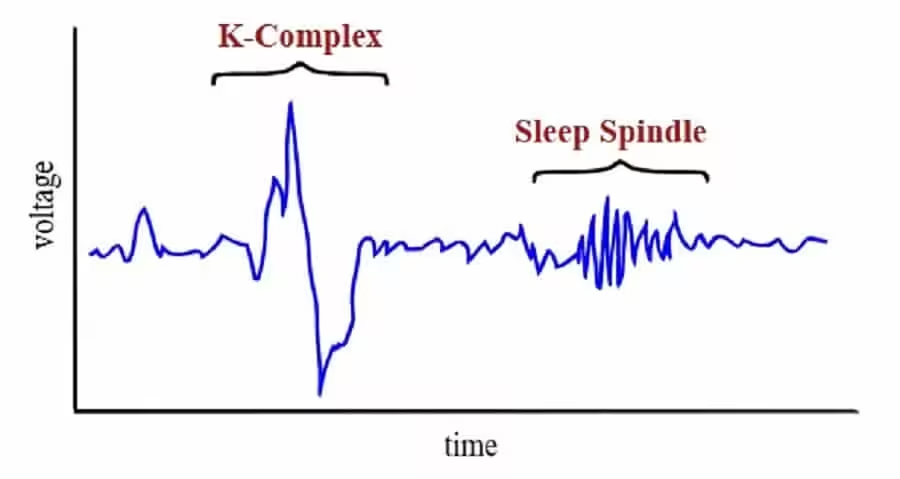
When people talk about sleep and blood pressure, they focus on deep sleep. Understandably. Stage 3 slow-wave sleep gets most of the research attention and most of the press coverage. But there is another stage that deserves more credit, one you spend nearly half your night in, and one that plays a direct and measurable role in keeping your blood pressure low while you sleep. That is Stage 2. For a full overview of how all five stages fit together, see our guide to the five stages of sleep.
Stage 2 is the most abundant sleep stage in the human sleep cycle. Adults spend between 45 and 55 percent of total sleep time here across a full night. It is where two of the most clinically significant brain events in sleep occur: sleep spindles and K-complexes. Both have a direct relationship to blood pressure. Neither gets discussed outside of sleep research.
This post explains what Stage 2 does for your cardiovascular system, what disrupts it, and why protecting it matters for anyone managing high blood pressure.
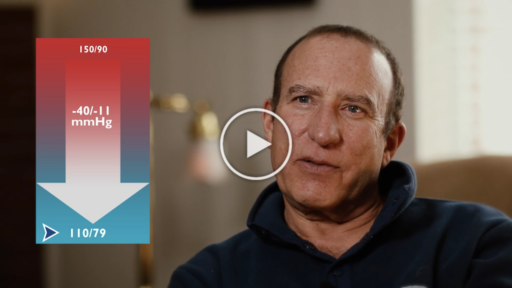
Watch How Mark Lowered His Blood Pressure Naturally.
It was 150/100, this morning it was 110/79
What happens to blood pressure during Stage 2 sleep
During Stage 2, the autonomic nervous system begins its nightly shift away from sympathetic dominance. Sympathetic activity falls. Heart rate slows. Blood pressure continues the decline it started in Stage 1. This is part of the mechanism behind what researchers call nocturnal blood pressure dipping, the normal 10 to 20 percent overnight drop in blood pressure that is now recognized as a significant marker of cardiovascular health. A 2026 review in Current Epidemiology Reports confirmed that blood pressure and heart rate gradually decline across the stages and cycles of NREM sleep, with sympathetic inhibition as the primary driver.
Non-dippers, people whose blood pressure does not fall adequately overnight, carry a cardiovascular mortality risk that research suggests may be as much as 40 percent higher than those who dip normally. Stage 2 is part of the mechanism that produces that dip. When Stage 2 is disrupted, fragmented, or shortened, the dip does not happen fully, and that risk accumulates night after night. A Mayo Clinic review of sleep and autonomic control identified NREM sleep as the phase where sympathetic inhibition, bradycardia, and lower blood pressure are concentrated.
Sleep spindles: the brain’s cardiovascular stabilizers
Sleep spindles are short bursts of synchronized neural activity generated by the thalamus during Stage 2. They appear on an EEG as brief rhythmic waves, 12 to 14 Hz, lasting about half a second to one and a half seconds. They occur hundreds of times a night. Their primary function is to protect sleep continuity by suppressing the brain’s response to external stimuli. A knock on the door, a passing car, a noise from another room. Spindles are the mechanism that lets you sleep through those disruptions rather than waking. Research published in the New England Journal of Medicine confirmed this protective function directly: arousal stimuli during Stage 2 that did not trigger a full cortical response were associated with stable sympathetic nerve activity and stable blood pressure.
The cardiovascular implication is direct. Every time Stage 2 sleep spindles successfully suppress an arousal, they prevent the accompanying spike in sympathetic nervous system activity that would temporarily raise blood pressure. Across a full night of sleep, hundreds of these micro-events either protect or disrupt the blood pressure trajectory. When spindle activity is high and sleep is stable, blood pressure stays on its downward overnight course. When spindle activity is low and sleep is fragmented, those micro-disruptions accumulate into a pattern of non-dipping.
K-complexes: the gating mechanism for blood pressure spikes
K-complexes are large, sharp waveforms that appear on an EEG during Stage 2 in response to external stimuli. They are distinct from sleep spindles but work alongside them. Where spindles suppress routine background noise, K-complexes are the brain’s response to more significant inputs. Research published in the American Journal of Physiology found that K-complexes during Stage 2 are associated with blood pressure oscillations. When a K-complex fires in response to a stimulus, there is a momentary increase in sympathetic nerve activity and a brief spike in blood pressure.
This sounds counterproductive, but it is not. The K-complex is a controlled arousal response. It acknowledges the stimulus, produces a brief and bounded blood pressure response, and then allows sleep to continue without a full awakening. The alternative is what happens when K-complexes cannot do their job: full arousals, which produce larger and more sustained sympathetic surges and meaningfully higher blood pressure spikes. Stage 2, with its combination of spindles and K-complexes, is the nervous system’s way of managing the transition between stimuli and sleep without paying the full cardiovascular cost of waking.

Watch how Julie Lowered her Blood Pressure Naturally.
It was 170/110, this morning it was 120/80
Learn More

What reduces Stage 2 sleep — and what that means for blood pressure
Alcohol
Alcohol is widely believed to improve sleep. It does not. It reduces sleep onset latency, which is why it feels helpful. But research confirms it disrupts sleep architecture significantly once it begins to metabolize. Specifically, alcohol reduces sigma power in NREM sleep, which is the frequency band directly associated with sleep spindle activity. Less spindle activity means less arousal suppression during Stage 2, more micro-fragmentation, and a less complete overnight blood pressure dip. A review published in PMC confirmed that Stage 2 NREM constitutes between 45 and 55 percent of the night under normal conditions and that alcohol specifically disrupts the sigma power that drives spindle generation.
Aging
Stage 2 sleep changes with age in ways that matter for blood pressure. Sleep spindle density and amplitude both decline as people get older. The thalamic circuitry that generates spindles becomes less efficient. The result is lighter, more fragmented sleep with less arousal suppression. This is one of the mechanisms behind the well-documented increase in non-dipping blood pressure patterns in older adults. The loss of Stage 2 spindle activity does not cause hypertension on its own, but it removes one of the overnight regulators that helps keep blood pressure controlled through the night.
Fragmented sleep and sleep disorders
Any condition that fragments sleep, whether it is obstructive sleep apnea, chronic insomnia, restless legs syndrome, or frequent noise-driven arousals, reduces the proportion of time spent in stable Stage 2. The more fragmented the night, the more often the K-complex gating mechanism is overwhelmed by full arousals. Each full arousal carries a sympathetic surge and a blood pressure spike. Over time, that pattern becomes the nightly baseline. For a deeper look at how sleep onset difficulty connects to blood pressure, see our post on insomnia and blood pressure.
Why Stage 2 is harder to protect than deep sleep
Stage 3 deep sleep is the most restorative stage and the one most affected by sleep deprivation. It is also easier to study and easier to talk about because its functions, tissue repair, growth hormone release, memory consolidation, are concrete and intuitive. Stage 2 is more diffuse. Its functions are protective and regulatory rather than restorative. It works by preventing things from happening: arousals, sympathetic surges, blood pressure spikes. That makes it harder to see and easier to overlook.
But the cardiovascular case for Stage 2 is well supported. The American Journal of Physiology review on central cardiovascular control during sleep identified NREM sleep broadly, and Stage 2 specifically, as the phase where baroreflex resetting and generalized cardiovascular deactivation produce the nocturnal BP dipping phenomenon. Stage 2 is not a waiting room between the lighter and deeper stages. It is an active, regulated phase with direct cardiovascular function.
How RESPeRATE supports Stage 2 sleep architecture
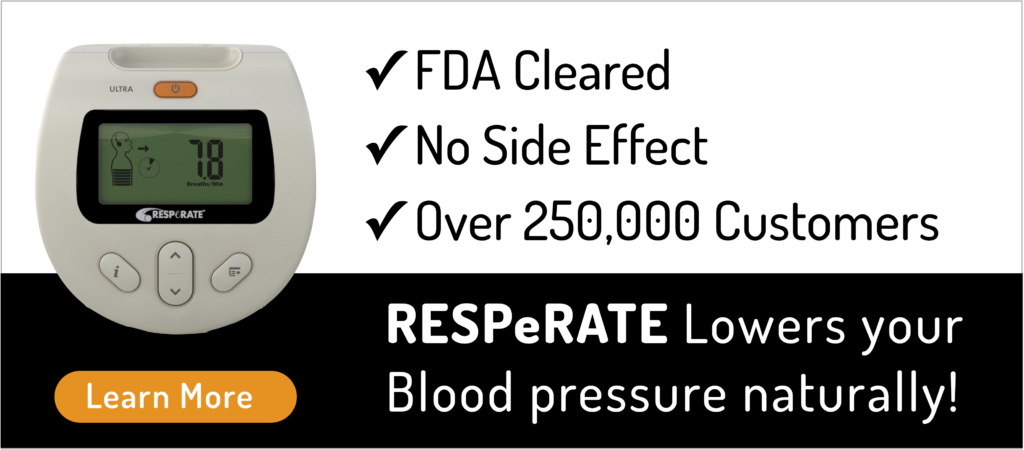
RESPeRATE guides a slow breathing exercise that calms the sympathetic nervous system by activating the vagus nerve through prolonged exhalation. The direct effect is lower blood pressure. The secondary effect, which the majority of RESPeRATE users report, is improved sleep quality. The mechanism connects directly to Stage 2. A calmer sympathetic nervous system at the start of sleep is less reactive to stimuli during Stage 2. That means spindles and K-complexes can do their regulatory work without competing against a baseline of heightened sympathetic tone. Sleep is less fragmented. The overnight blood pressure dip is more complete.
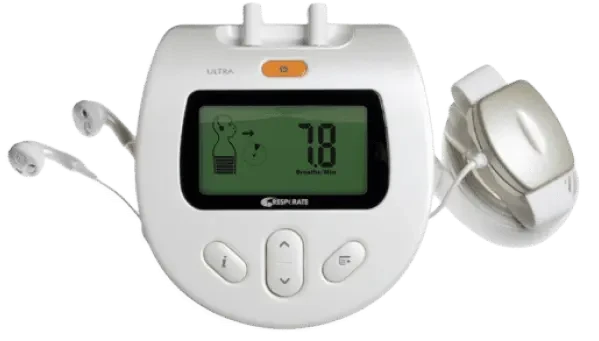
RESPeRATE is the only FDA-cleared non-drug device clinically proven to lower blood pressure. For the full series on sleep and blood pressure, see our posts on deep sleep and blood pressure and insomnia and blood pressure. Use RESPeRATE as part of your overall health program alongside your physician-directed treatment plan. See the full clinical evidence at our clinical proof page.


 Clinically proven

 Eli
Eli 





Comments