
 Brian Fairchild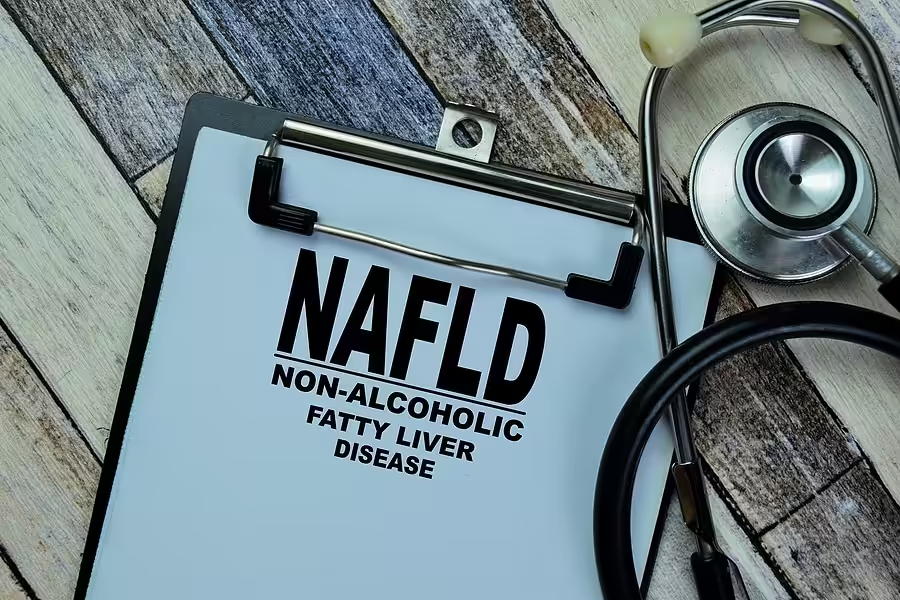
Fatty liver disease and high blood pressure frequently appear together in the same patient. The question of whether they are connected or simply coincidental has a clear answer: they are connected, and the connection runs in both directions. Each condition independently raises the risk of developing the other. More importantly, both share several underlying mechanisms that, when understood, point toward more effective ways to address them simultaneously.
Fatty liver disease affects roughly 25 to 30 percent of adults in Western countries. Most people who carry the diagnosis do not know it, because the condition rarely causes symptoms in its early stages. High blood pressure affects nearly half of all American adults. The overlap between these two populations is large and it is not accidental.
A Note on Terminology
The medical name for this condition changed in 2023. For years, doctors called it non-alcoholic fatty liver disease, or NAFLD. An international expert panel then renamed it metabolic dysfunction-associated steatotic liver disease, or MASLD. The new name reflects what the condition actually is: a metabolic disease sharing the same underlying processes as obesity, insulin resistance, and cardiovascular disease. If your physician has mentioned NAFLD, it refers to the same condition. This post uses both terms interchangeably.
The more severe inflammatory form, previously called NASH, now goes by MASH. At this stage, the liver develops significant inflammation and scarring alongside fat accumulation. The sooner the condition comes to clinical attention, the more reversible it is.
It was 150/100, this morning it was 110/79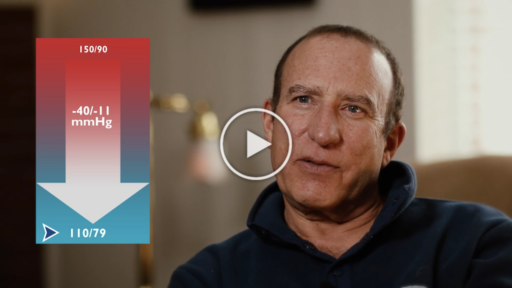
Watch How Mark Lowered His Blood Pressure Naturally.
How the Two Conditions Drive Each Other
A 2022 systematic review and meta-analysis confirmed a bidirectional relationship between MASLD and hypertension. People with fatty liver disease have a significantly higher risk of developing high blood pressure. People with high blood pressure have a significantly higher risk of developing fatty liver disease. This relationship holds after researchers adjust for body weight, blood sugar, triglycerides, and other metabolic variables. The two conditions share specific biological pathways rather than simply clustering together because of shared risk factors.
The mechanisms run through at least four distinct pathways.
Insulin Resistance: The Central Link
Insulin resistance is the most important shared mechanism between MASLD and hypertension. When liver cells develop resistance to insulin, the liver loses its ability to regulate glucose and lipid metabolism properly. Fat accumulates in liver cells. The liver then releases inflammatory proteins that drive systemic insulin resistance throughout the body, affecting muscle, fat tissue, and the kidneys.
In the kidneys, insulin resistance contributes directly to water retention and sodium reabsorption. More sodium retained means more fluid in circulation. More fluid means higher blood pressure. This is the same mechanism that diuretics target. However, in MASLD, the driver originates in the liver rather than in the kidneys themselves. A 2024 review in Cardiology Discovery confirmed this pathway alongside a further finding: ACE inhibitors and angiotensin receptor blockers, two of the most commonly prescribed blood pressure drug classes, may also slow liver fibrosis progression. For people with both conditions, that makes the medication conversation with a physician worth having specifically.
Systemic Inflammation
MASLD is not simply fat stored in the liver. It is also an inflammatory condition. Fat accumulation in liver cells triggers an immune response that releases inflammatory markers including interleukin-6 into the bloodstream. These inflammatory compounds damage the endothelium, the inner lining of blood vessel walls, and activate pathways that stiffen arteries and raise blood pressure. For a deeper look at how arterial inflammation drives cardiovascular risk broadly, see our post on arterial inflammation and blood pressure.
Sympathetic Nervous System Activation
The sympathetic nervous system is chronically more active in people with MASLD. Elevated sympathetic tone raises heart rate, constricts blood vessels, and promotes sodium retention through effects on the kidneys. Research published in the AHA journal Hypertension confirmed that sympathetic nervous system overactivation is both a consequence of the metabolic dysfunction underlying MASLD and a driver of the hypertension that accompanies it. Stress, sleep apnea, and anxiety all activate the same pathway, compounding the problem for people who carry multiple risk factors. For more on this connection, see our article on how stress affects blood pressure.
Gut Dysbiosis and the Liver-Gut Axis
The gut microbiome plays a direct role in both conditions. MASLD closely associates with increased intestinal permeability and disrupted gut bacterial balance. When the intestinal barrier becomes leaky, bacterial byproducts enter the portal circulation and travel directly to the liver, triggering inflammation and worsening fat accumulation. The same gut dysbiosis that contributes to fatty liver disease also drives systemic inflammation that raises blood pressure. For more on the gut-blood pressure connection, see our post on the gut microbiome and blood pressure.
Who Should Be Aware of This Connection
Several groups managing high blood pressure are particularly likely to have undiagnosed MASLD alongside it. Those with metabolic syndrome — the combination of central obesity, elevated blood sugar, high triglycerides, low HDL, and high blood pressure — have a very high prevalence of MASLD. Those with type 2 diabetes or insulin resistance carry similar risk. Those whose blood pressure has been difficult to control despite medication may have MASLD-driven mechanisms that standard antihypertensive treatment does not fully address.
Importantly, MASLD can occur in people who are not visibly overweight. Researchers call this lean MASLD. It occurs in people with a normal BMI but metabolic dysfunction driven by visceral fat accumulation around the organs. Absence of obesity does not rule out MASLD. A 2024 study using Mendelian randomization methods found evidence of a causal relationship between elevated blood pressure and the development of NAFLD, adding further weight to the idea that managing blood pressure aggressively in at-risk populations may also protect liver health.
It was 170/110, this morning it was 120/80
Watch how Julie Lowered her Blood Pressure Naturally.


What Can Be Done About Both
The most effective interventions for MASLD and hypertension overlap substantially. Several lifestyle approaches address both conditions simultaneously.
Weight loss
A 5 to 10 percent reduction in body weight can meaningfully reduce liver fat content and produce blood pressure reductions in the same range as a single antihypertensive medication. Weight loss works on both conditions through the shared mechanism of improved insulin sensitivity.
The DASH diet
The DASH diet aligns well with dietary recommendations for MASLD. Its emphasis on vegetables, whole grains, lean protein, and reduced saturated fat maps directly onto what the evidence supports for liver fat reduction. Both conditions benefit from lower sodium and higher potassium intake.
Aerobic exercise
Regular aerobic exercise reduces both liver fat and blood pressure through overlapping mechanisms. It improves insulin sensitivity, reduces systemic inflammation, and lowers sympathetic nervous system activity. Even moderate activity at 150 minutes per week produces measurable benefits for both conditions.
Reducing fructose and added sugar
High fructose intake drives liver fat accumulation through a direct metabolic pathway. Reducing it is one of the most effective specific dietary interventions for MASLD, and it also benefits blood pressure by reducing insulin resistance. This is one area where the dietary guidance for MASLD goes slightly further than standard DASH guidance.
Alcohol reduction
Reducing alcohol matters even when a fatty liver diagnosis carries a non-alcoholic label. Alcohol adds further metabolic burden to a liver already under stress. Even modest intake can accelerate progression from simple fat accumulation to more serious liver inflammation.
Medication discussion
ACE inhibitors and ARBs are commonly prescribed for blood pressure and may also slow liver fibrosis progression. Certain other antihypertensive drug classes may be less favorable in the context of MASLD. This is a conversation worth having specifically with your physician rather than assuming standard blood pressure treatment automatically accounts for liver health.
Where RESPeRATE Fits
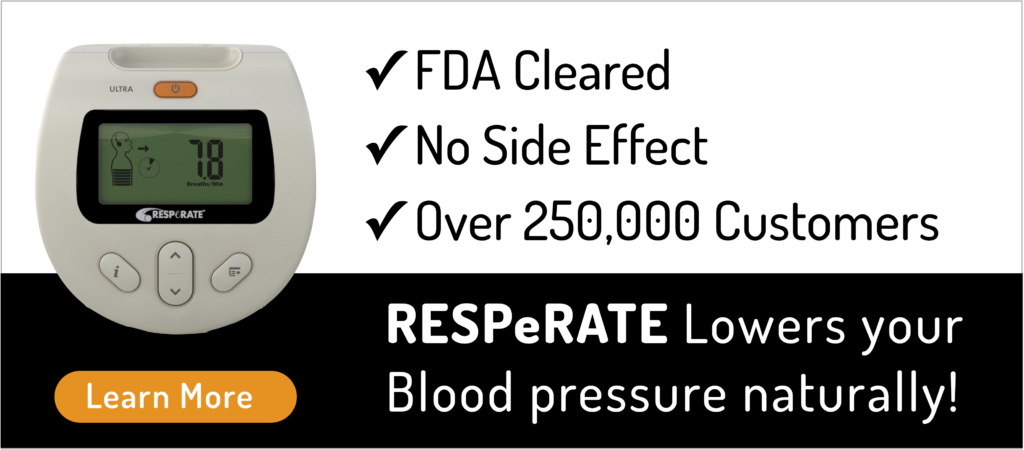
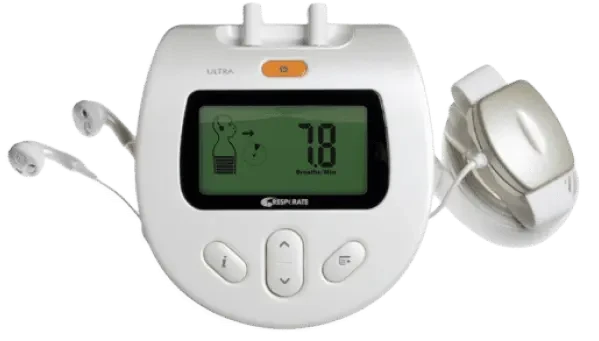
RESPeRATE addresses the sympathetic nervous system component of this picture directly. Chronic sympathetic overactivation is one of the documented mechanisms linking MASLD to hypertension. It is also the pathway that stress, poor sleep, and metabolic dysfunction all amplify. RESPeRATE guides slow breathing with prolonged exhalation, shifting the nervous system from sympathetic to parasympathetic mode. As a result, it reduces blood vessel constriction and lowers the neural pressure driving blood pressure up. It complements the dietary and exercise interventions that address the metabolic root of both conditions.
RESPeRATE is the only FDA-cleared non-drug device clinically proven to lower blood pressure. Use it as part of your overall health program alongside your physician-directed treatment plan. Review the full evidence at our clinical proof page.
Summary
Fatty liver disease and high blood pressure are not simply two conditions that happen to appear together. They share documented biological mechanisms and drive each other through insulin resistance, arterial inflammation, sympathetic nervous system activation, and gut dysbiosis. Recognizing this connection allows people managing either condition to pursue interventions that address both at once. Weight loss, the DASH diet, regular exercise, reduced fructose, and tools that calm the sympathetic nervous system all work on both conditions through overlapping pathways. If you carry both diagnoses, the most useful conversation to have with your physician is not about managing each in isolation, but about the shared drivers underneath them both.


 Clinically proven

 Eli
Eli 





Comments