
 Brian Fairchild
Blood pressure cuff size is one of those things most people never think about. You sit down, the nurse or doctor wraps the cuff around your arm, and you wait for the numbers. At home, you pull out the monitor that came in the box and assume it fits. Job done, right?
Not quite. The cuff is the single most controllable factor in the accuracy of your blood pressure reading. Get the size wrong, and the number you see could be meaningfully different from your actual blood pressure. That difference could affect whether you get diagnosed, whether your doctor changes your treatment, or whether you think things are improving when they are actually not.
The good news is that getting it right is simple once you know what to look for. This post walks you through everything: why size matters, what the research actually shows, how to measure your arm in about 30 seconds, and what to do with that number.
Why Blood Pressure Cuff Size Actually Matters
Here is the basic physics of it. A blood pressure cuff works by inflating against your arm and cutting off blood flow, then slowly deflating until the monitor detects the pressure at which your blood starts flowing again. For that detection to be accurate, the cuff bladder needs to cover the right proportion of your arm.
If the cuff is too small for your arm, it has to squeeze harder to compress the artery. That extra pressure gets added to your reading. The result is a falsely high number. If the cuff is too large, it does not compress the artery effectively. The result is a falsely low number.
The American Heart Association (AHA) recommends that the cuff bladder width cover roughly 40 percent of the arm circumference, and the bladder length cover at least 80 percent. When those proportions are off, so is your reading.
The Cuff(SZ) Trial: What 195 People Told Us
In 2023, researchers at Johns Hopkins published the Cuff(SZ) randomized crossover trial in JAMA Internal Medicine. It is the most rigorous direct study of cuff size and accuracy to date, and the numbers are striking.
The study enrolled 195 adults and had each person measured with appropriately sized, too small, and too large cuffs in random order using an automated monitor, the same type most people use at home.
Too small cuff on a large arm: overestimated systolic blood pressure by 4.8 mmHg on average
Too small cuff on an extra-large arm: overestimated systolic blood pressure by 19.7 mmHg on average
Too large cuff on a slim arm: underestimated systolic blood pressure by 3.6 mmHg on average
A 5 mmHg error sounds modest. But remember: the threshold between a normal reading and a Stage 1 hypertension diagnosis is just 10 mmHg. A 20 mmHg error can push someone from a normal reading into Stage 2 hypertension territory without any change in their actual health. That is a misdiagnosis with real consequences.
You can read the full Cuff(SZ) trial at JAMA Internal Medicine (2023).
It was 150/100, this morning it was 110/79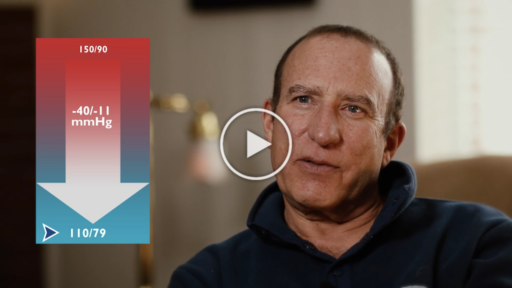
Watch How Mark Lowered His Blood Pressure Naturally.
Most people need a bigger cuff than they think
Here is a finding that surprises most people: in the Cuff(SZ) study, more than half the participants, even in a group with a lower body mass index than the US national average, required a large or extra-large cuff. Other research suggests 53 percent of men and 34 percent of women in the US need a large or extra-large cuff.
The standard cuff that comes in most home monitor boxes covers arm circumferences of 22 to 32 centimeters. That is the right size for a smaller adult arm. For many people, especially men and anyone who carries extra weight, it is too small. And using it anyway is exactly how you end up with a reading that looks alarming but does not accurately reflect what is happening in your arteries.
A 2024 study in the journal Blood Pressure reinforced this, finding that universal cuffs marketed as covering a wide size range overestimated systolic blood pressure by 6.4 mmHg in people with arm circumferences above 32 centimeters. One size does not fit all.

How to Measure Your Arm and Choose the Right Cuff
You need a flexible tape measure and about 30 seconds. Here is how to do it correctly.
Step 1: Find the midpoint of your upper arm
Bend your elbow and bring your forearm across your chest. Find the bony point of your shoulder, which is the acromion, and the tip of your elbow. Measure the distance between them and mark the midpoint on the back of your upper arm. This is the standard measurement location used in clinical trials.
Step 2: Measure your arm circumference
Let your arm hang relaxed at your side. Wrap the tape measure around your arm at the midpoint you just marked. Do not indent the skin. Read the measurement in centimeters.
Step 3: Match your measurement to a cuff size
Use the table below to find your size. If your measurement falls at the upper end of a range, go up to the next size. When in doubt, the larger cuff causes less error than the smaller one.
| Cuff Size | Arm Circumference (cm) | Arm Circumference (inches) | Who typically needs it |
|---|---|---|---|
| Small Adult | 22 to 26 cm | 8.7 to 10.2 in | Slim arms, children, or adolescents |
| Standard Adult | 27 to 34 cm | 10.6 to 13.4 in | Most common; fits most adults |
| Large Adult | 35 to 44 cm | 13.8 to 17.3 in | Larger arms; very common in US |
| XL / Extra-Large | 45 to 52 cm | 17.7 to 20.5 in | Larger arms; very common in US |
| Thigh Cuff | Over 52 cm | Over 20.5 in | Very large arms; needs clinical advice |
Sources: AHA guidelines; Cuff(SZ) JAMA 2023; Target:BP (AMA/AHA); AHA 2019 BP measurement scientific statement.
Getting the Most Accurate Reading Possible
Choosing the right cuff is the most important step. But technique matters too. Even a correctly sized cuff will give you inaccurate numbers if the conditions are off. Here is what the research and clinical guidelines say.
Before you sit down
Avoid caffeine, exercise, and smoking for 30 minutes before measuring. Empty your bladder first. A full bladder can add two to three mmHg to your reading. Sit quietly for five minutes before you start. That rest period alone can lower a reading by several points compared to walking in and measuring immediately.
Position matters more than most people realize
Sit with your feet flat on the floor, not crossed. Rest your back against the chair. Place your arm on a flat surface at heart level. If your arm is hanging down or raised above your heart, your reading will be thrown off.
The cuff should sit on bare skin. Measuring over clothing, even a thin sleeve, can add four to six mmHg to the reading. Roll your sleeve up, or take it off.
The two-finger rule: after wrapping the cuff, you should be able to slide exactly two fingers underneath the edge. If you cannot get even one finger in, it is too tight. If three fingers fit easily, it is too loose. Both affect accuracy.
Take multiple readings
The first reading is almost always higher than the second or third. This is normal. Take two or three readings about two minutes apart and average the results. Some monitors do this automatically.
The AHA recommends measuring at the same time each day, ideally morning and evening, over seven days before bringing your log to your doctor. A single measurement in the office tells you much less than a week of home readings.
Anxiety in a clinical setting is another factor that can distort a reading, distinct from cuff fit or technique; if your in-office numbers run consistently higher than your home readings, you may be experiencing white coat hypertension rather than a true change in your blood pressure.
The AHA and AMA joint policy statement on home blood pressure monitoring goes into detail on how to get the most from self-measured readings. You can read the full statement on PubMed.
Wrist monitors: when and why to be careful
Wrist monitors are convenient, but the AHA specifically recommends upper arm monitors for home use. Wrist readings are sensitive to position. Your wrist needs to be at heart level during the measurement, which most people do not do correctly.
That said, if your arm circumference exceeds the range of any available upper arm cuff, a wrist monitor validated for accuracy may be your only practical option. Ask your doctor or pharmacist about validated models for your situation.
It was 170/110, this morning it was 120/80
Watch how Julie Lowered her Blood Pressure Naturally.


A Word About Pharmacy Kiosks and One-Size Machines
Many people check their blood pressure at the pharmacy kiosk or the grocery store machine. It is convenient, and it is better than never checking at all. But those machines almost always have one cuff. That cuff is sized for a standard adult arm.
If you have a larger arm, those readings may be consistently elevated above your actual blood pressure. The FDA has acknowledged this issue and recommends that anyone using a public machine know their arm circumference so they can assess whether the reading is likely accurate.
This does not mean kiosk readings are worthless. They can flag a trend and prompt you to investigate further. But they should not be the sole basis for a treatment decision. Bring your own validated home monitor to your doctor’s appointment so they can compare readings directly.
The AHA offers a validated monitor database at validatebp.org to help you find devices that have been tested for accuracy with specific cuff sizes.
Why Accurate Readings Matter for Your Heart Health
This is worth saying plainly: underestimating or overestimating your blood pressure by 5 to 20 mmHg has real clinical consequences. Research cited by the American Medical Association found that underestimating systolic blood pressure by just 10 mmHg can increase the risk of fatal heart attack and stroke by 10 to 40 percent. Overestimating by five mmHg could lead to approximately 30 million people being placed on treatment they do not need.
Blood pressure management only works if the numbers are accurate. Getting your cuff size right is the starting point. Everything else, diet, exercise, stress management, and the daily practices that move the needle over time, is built on that foundation.
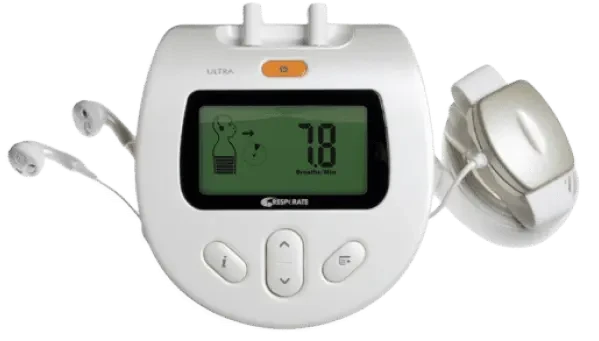
RESPeRATE is the only FDA-cleared device designed to lower blood pressure naturally. It works by guiding you through slow, paced breathing that relaxes blood vessel walls and reduces the neural overdrive that keeps blood pressure elevated. Used daily as part of your overall health program, alongside your physician-directed treatment plan, it produces measurable results that your accurately taken home readings will reflect over time.
You can read more about the clinical evidence behind RESPeRATE on our clinical proof page.
Summary
Blood pressure cuff size is not a minor detail. A cuff that is too small can overestimate your systolic reading by up to 20 mmHg, easily pushing a normal reading into hypertension territory. A cuff that is too large can underestimate it, masking a real problem.
The fix is simple. Measure your arm circumference at the midpoint of your upper arm. Match that number to the size chart above. Buy or request a cuff that fits. Take your readings at the same time each day, on bare skin, seated with your arm at heart level, and average two to three consecutive readings.
Getting this right means the numbers you and your doctor are working from actually reflect what is happening in your body. That is the foundation of everything else.
Ready to take your blood pressure monitoring seriously? Explore RESPeRATE today and use it as part of your overall health program, alongside your physician-directed treatment plan.

 Clinically proven

 Eli
Eli 





Comments
2 Replies to “Does Cuff Size Matter When Checking Your Blood Pressure?”
Eli,
I finally bought a wrist blood pressure cuff because I never felt confident about the results I got on the arm cuff, even though I followed the directions as precisely as possible. The wrist cuff readings were immediately lower. So, I’ve made a practice of doing both on occasion (not every day) just to make sure the readings are consistent. The arm cuff is usually a little higher, but never over ten points. I figure it’s mostly my “white coat” anxiety, because arm cuffs always make me anxious. The wrist cuff doesn’t. What do you think of wrist cuffs, in general?
Best,
Rose
Dear Rose, From what I have read and from a nursing perspective I have found the wrist monitors
not as accurate as the arm cuff. According to the Mayo Clinic, “Some wrist blood pressure monitors may be accurate if used exactly as directed. However, the American Heart Association recommends using a home blood pressure monitor that measures blood pressure in your upper arm and not using wrist or finger blood pressure monitors. Wrist blood pressure monitors are extremely sensitive to body position. To get an accurate reading when taking your blood pressure with a wrist monitor, your arm and wrist must be at heart level. Even then, blood pressure measurements taken at the wrist are usually higher and less accurate than those taken at your upper arm. That’s because the wrist arteries are narrower and not as deep under your skin as those of the upper arm.”
Comments are closed.