
 Brian Fairchild
The 2025 blood pressure guidelines from the American Heart Association and American College of Cardiology replace the 2017 version, and while the numbers that define high blood pressure haven’t changed, how doctors decide when to treat it has. Understanding the difference can help you make sense of a conversation your own doctor may bring up at your next visit.
What Counts as High Blood Pressure in 2025
The classification tiers set in 2017 remain the standard under the 2025 guideline (see our full breakdown of what counts as normal blood pressure):
- Normal: Below 120/80 mm Hg
- Elevated: Systolic 120-129 and diastolic below 80
- Stage 1 Hypertension: Systolic 130-139 or diastolic 80-89
- Stage 2 Hypertension: Systolic 140 or higher, or diastolic 90 or higher
The treatment target also stays the same at below 130/80. According to the American College of Cardiology, hypertension now affects close to half of U.S. adults, making it one of the most common cardiovascular risk factors in the country.
The Real Change: A New Way to Estimate Risk
The part of the 2025 blood pressure guidelines getting the most attention isn’t the numbers, it’s the tool doctors use to decide what to do about them. For years, clinicians relied on the Pooled Cohort Equations, a formula built in 2013 from a relatively narrow set of patient data. The 2025 guideline replaces it with the American Heart Association’s PREVENT calculator, built from health data spanning more than 6 million adults.
PREVENT differs from the old formula in a few ways. It factors in kidney and metabolic health alongside traditional measures like cholesterol and blood pressure, drops race as a variable entirely, and can estimate risk over 30 years instead of just 10, which matters for younger adults whose short-term risk looks low even when their long-term risk doesn’t. According to the American Heart Association, the calculator is meant to be a starting point for a conversation with your doctor, not a tool for self-diagnosis.
If your doctor mentions a PREVENT score at your next appointment, that’s what they’re referring to.
What This Means If You’re in the Stage 1 Range
The risk threshold for starting medication also shifted. Under the old formula, treatment was generally considered once someone’s estimated 10-year cardiovascular risk hit 10 percent or higher. Under PREVENT, that threshold drops to 7.5 percent, according to the American College of Cardiology. In practical terms, more adults with stage 1 hypertension, particularly younger adults, may now have a conversation with their doctor about medication sooner than they would have under the previous guideline.
For people with stage 1 hypertension and a lower risk score, the guideline still recommends trying lifestyle changes first, for three to six months, before adding medication if blood pressure hasn’t come down. That sequencing hasn’t changed. What’s changed is how precisely doctors can now identify who falls into that lower-risk group to begin with.
The Bottom Line: Lifestyle Still Comes First
Whatever a risk score shows, the guideline’s advice on where to start hasn’t moved: limit sodium to under 2,300 mg a day (ideally closer to 1,500 mg), stay active for 75 to 150 minutes a week, moderate alcohol, and follow a heart-healthy eating pattern such as DASH.
For every 10 mm Hg drop in systolic blood pressure, research cited in the guideline points to a 17 percent lower risk of coronary heart disease, a 27 percent lower risk of stroke, and a 28 percent lower risk of heart failure. Home blood pressure monitoring, tracked consistently and shared with your doctor using a reliable monitor, remains one of the most useful things you can do between visits.
How to Lower Blood Pressure Naturally
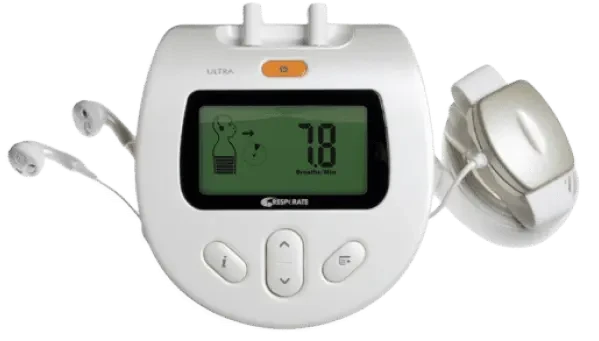
Recipes, movement, and monitoring all support the same goal. For an added layer of support, RESPeRATE is an FDA-cleared device that works alongside your physician-directed treatment plan as part of your overall health program.

 Clinically proven


 Eli
Eli 




Comments
5 Replies to “What the 2025 Blood Pressure Guidelines Mean for You”
I just wanted to thank you for your post and I do am terrified to take my BP.
I agree with every word you wrote.
God bless you
Leticiac
You are completely correct. If people only knew how much.
So true! How many more people (young) will now be placed on HBP meds. All to make more money!!
Well said!!! And all too true, unfortunately. Its all about the money.
You are absolutely correct that few doctor’s offices IF ANY actually ever take blood pressure readings properly. At home and relaxed your readings are normal 120/80 or below. Now, at the appointments you jump into the office, sit down and immediately get the cuff. The button gets pushed with your arm dangling by your side like a broken marionette’s appendage while a temperature probe is jammed in your mouth. All the while you’re peppered with the thousand question quiz of age, weight, height, color of your dog’s hair, etc. You’re shifting even more uncomfortably in the chair when they get to the question about ever telling a fish tale to your friends about the size of that …well…fish, that you claimed to have landed. The cuff deflates and your reading is now near 145 since you hadn’t the opportunity yet to even catch your breath from the quick nonstop flurry of questions and activity. The tech asks if you’ve had high BP and you innocently say “no”. They may even take a second reading literally 10 seconds later to see if it’s decreased -REALLY??? Do our bodies have an on/off switch that works that fast? However, medication is ultimately prescribed and you think, should I even take this knowing the office procedure for reading this has all been done wrong and results greatly misleading. One would think that if anywhere, the doctor’s office is where they would want/demand the most accurate reading for a proper baseline, but alas, too many patients and a harried staff serves no patient/customer well. It’s like taking your car to a bad mechanic who, in a rush, doesn’t diagnose your engine problem correctly and wants to repair a problem that may not exist. What to do…