
 Brian Fairchild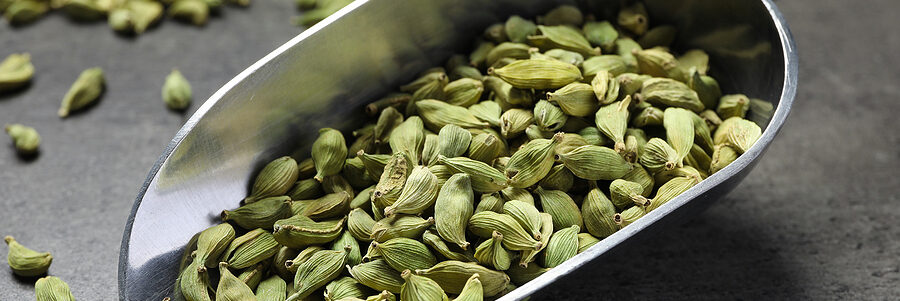
Cardamom and blood pressure share a relationship that goes much deeper than the single Indian study that originally put this spice on the cardiovascular radar. Green cardamom — the small, fragrant pods found in chai, rice dishes, and desserts across South Asia and the Middle East — contains a set of bioactive compounds that work through at least four distinct mechanisms. Together, those mechanisms connect to well-established cardiovascular physiology. Moreover, a 2024 meta-analysis now gives us a more rigorous look at the evidence than anything published when most of the online content about this topic was written.
This post covers what those four mechanisms are, what the clinical evidence actually shows, and — crucially — how much cardamom you actually need to take to see any effect. That last part surprises most people.
For a broader look at whole foods that support healthy blood pressure, see our roundup of natural foods to lower blood pressure.
It was 150/100, this morning it was 110/79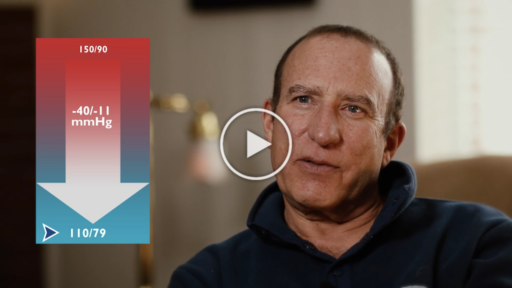
Watch How Mark Lowered His Blood Pressure Naturally.

What Cardamom Is
Cardamom belongs to the ginger family and comes in two main varieties. Green cardamom (Elettaria cardamomum) is the one studied for blood pressure and cardiovascular effects. Black cardamom has a smokier flavor and a different phytochemical profile. All the research discussed in this post concerns green cardamom specifically.
The plant is native to southern India and Guatemala. Its seed pods contain seeds rich in volatile oils, flavonoids, and other phenolic compounds. The primary active compounds include cineole, terpinene, limonene, and various flavonoids. These molecules are where the cardiovascular research begins.
The Four Mechanisms Behind Cardamom’s Cardiovascular Effects
Researchers have documented four distinct pathways through which cardamom may influence blood pressure. Each operates differently. Each also connects to cardiovascular physiology that physicians and researchers already understand well.
Calcium Channel Antagonism
Calcium channel blockers are among the most widely prescribed blood pressure medications. They work by blocking calcium entry into smooth muscle cells in artery walls. That prevents those cells from contracting and narrowing the vessel. Cardamom extracts appear to work through the same pathway. Laboratory and animal studies show cardamom compounds act as calcium channel antagonists, reducing blood vessel constriction through a mechanism mechanistically consistent with pharmaceutical calcium channel blockers.
Nitric Oxide Release
Nitric oxide signals blood vessel walls to relax and widen. Reduced nitric oxide availability is a primary feature of endothelial dysfunction — the early stage of cardiovascular disease where artery walls lose their ability to respond to circulatory demands. Research shows cardamom augments nitric oxide levels through the endothelial nitric oxide synthase pathway. Consequently, it restores some of the vasodilatory signaling that healthy arteries depend on. Interestingly, this is also one of the mechanisms through which RESPeRATE works — slow breathing activates the same parasympathetic pathways that promote nitric oxide release.
Cholinergic Vasodilation
The cholinergic pathway is how the parasympathetic nervous system promotes blood vessel relaxation. When the body shifts from stress to rest, acetylcholine signals blood vessels to dilate. Cardamom compounds appear to support this pathway, promoting vasodilation through the same rest-and-recovery signaling that healthy sleep and slow breathing also activate.
Mild Diuretic Effect
Cardamom has a mild diuretic effect — it increases urinary output, which in turn reduces blood volume and pressure. This mechanism is similar in principle to thiazide diuretics, one of the most commonly prescribed blood pressure medication classes. However, the magnitude of cardamom’s effect is far smaller than pharmaceutical diuretics.
What the Clinical Evidence Actually Shows
The original study
The most cited piece of evidence for cardamom and blood pressure was published in the Indian Journal of Biochemistry and Biophysics in 2009. Verma and colleagues gave 3 grams of cardamom powder daily for 12 weeks to 20 patients with newly diagnosed Stage 1 hypertension. Both systolic and diastolic blood pressure fell significantly. Furthermore, antioxidant levels in the blood rose by up to 90 percent. The researchers concluded that cardamom’s antioxidant capacity is central to its blood pressure effects.
That study has real limitations — it was small, unblinded, and conducted in a single population. Nevertheless, it has held up reasonably well in subsequent research.
The 2024 meta-analysis
The more rigorous piece of evidence is a 2024 systematic review and meta-analysis by Heydarian and colleagues, published in Food Science and Nutrition. The researchers pooled data from eight randomized clinical trials. They found that cardamom significantly reduced systolic blood pressure (WMD: −0.54 mmHg, p=0.002) and diastolic blood pressure (WMD: −0.90 mmHg). Inflammatory markers also fell significantly across the pooled studies, including hs-CRP, IL-6, and TNF-alpha.
The honest read on those blood pressure numbers: a reduction of 0.5 to 0.9 mmHg is statistically significant but clinically modest. Cardamom is not going to move the needle the way medication will. Additionally, the meta-analysis authors specifically noted that the limited number of studies requires caution in interpreting results. This is not a reason to dismiss the evidence — it is a reason to frame it accurately.
The Anti-Inflammatory Angle — The Stronger Cardiovascular Story
The more compelling cardiovascular case for cardamom may run through inflammation rather than blood pressure directly. Chronic inflammation is an independent driver of hypertension and cardiovascular disease. It damages the endothelium, stiffens artery walls, and activates the renin-angiotensin system that raises blood pressure.
The 2024 meta-analysis found that cardamom significantly reduced all three major inflammatory markers measured — hs-CRP, IL-6, and TNF-alpha. That reduction in inflammatory burden is arguably more meaningful for long-term cardiovascular health than the modest blood pressure numbers alone suggest. For anyone managing blood pressure alongside chronic inflammation, however, both effects work in the same direction.
It was 170/110, this morning it was 120/80
Watch how Julie Lowered her Blood Pressure Naturally.


How to Use Cardamom Practically
The dose studied in clinical research is consistently 3 grams of ground cardamom powder per day. In practical terms, that is roughly half a teaspoon, divided into two servings. Most studies ran for 8 to 12 weeks. Researchers consistently note that benefits build gradually rather than appearing immediately.
Here is the important practical point that most articles skip. Using cardamom as a cooking spice is unlikely to provide enough dose to see blood pressure effects. A pinch in your curry or a pod in your chai is good for flavor and delivers some antioxidant benefit. However, it falls well short of the 3-gram daily threshold studied in trials. As GoodRx notes in their review of the evidence, most of the blood pressure research uses supplements providing a concentrated dose rather than culinary quantities.
For anyone wanting to use cardamom specifically for blood pressure support, a cardamom tea made with half a teaspoon of freshly ground powder steeped in hot water is one practical approach that stays close to the studied dose. Whole pods retain volatile oils better than pre-ground powder. Ground cardamom loses its potency significantly within six months of opening. Fresh grinding from whole pods is therefore the better choice for this purpose.
Cautions Worth Knowing
Cardamom is safe for most people in both culinary and supplemental amounts. However, a few specific cautions apply to people managing blood pressure.
Gallstones
Cardamom may trigger gallbladder contractions in people with gallstones. Anyone with a gallbladder condition should check with their physician before using cardamom in therapeutic doses.
Medication interactions
Given its mild diuretic and calcium channel antagonist effects, cardamom at therapeutic doses could add to the blood pressure lowering effect of antihypertensive medications. This is not a reason to avoid it. However, it is worth monitoring blood pressure closely and mentioning it to your physician when starting.
Pregnancy
Normal culinary amounts are generally considered safe during pregnancy. Therapeutic doses are not well studied in this context and are best avoided without medical guidance.
Blood sugar
Some research suggests cardamom may lower blood glucose levels. People managing diabetes or taking blood sugar medications should be aware of this potential additive effect and discuss it with their physician.
Where RESPeRATE Fits Alongside Cardamom
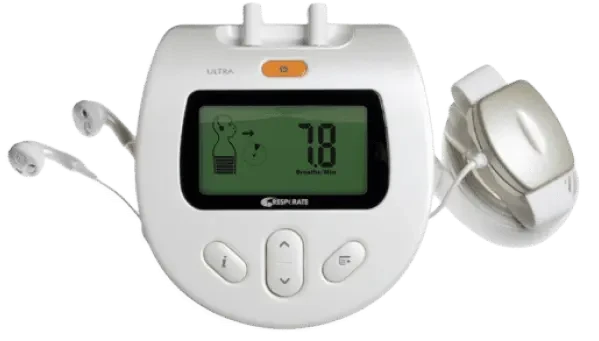
Cardamom addresses the inflammatory and vascular side of blood pressure — reducing endothelial damage and arterial stiffness that chronic inflammation drives. RESPeRATE addresses the neural side — calming the sympathetic nervous system overactivation that keeps blood pressure elevated independent of inflammation. Together, the two work on different parts of the same problem. Neither replaces physician-directed care. RESPeRATE is the only FDA-cleared non-drug device clinically proven to lower blood pressure. More than 50 published studies support it. Use it as part of your overall health program alongside your physician-directed treatment plan. Review the full evidence at our clinical proof page.
Summary
Cardamom works on blood pressure through four documented mechanisms: calcium channel antagonism, nitric oxide release, cholinergic vasodilation, and a mild diuretic effect. The 2024 meta-analysis pooling eight randomized controlled trials confirms statistically significant but modest reductions in both systolic and diastolic blood pressure. Furthermore, it confirms meaningful reductions in inflammatory markers — arguably the stronger cardiovascular story.
The studied dose is 3 grams of ground cardamom daily over 8 to 12 weeks. That target requires deliberate daily preparation rather than ordinary cooking use. Cardamom is not a replacement for medication or proven lifestyle interventions. Nevertheless, the evidence supports it as a genuinely interesting addition to a heart-healthy routine — one backed by real mechanisms and more clinical research than most people realize.
For another herbal option with a strong clinical evidence base, our post on hibiscus tea and blood pressure covers 26 randomized controlled trials and the specific mechanism behind the effect.

 Clinically proven


 Eli
Eli 



Comments