
 Brian Fairchild
Hypertension researchers have puzzled over a consistent pattern for decades. Blood pressure rises in winter and falls in summer. It tracks with latitude. People living farther from the equator carry higher cardiovascular risk. Vitamin D supplementation was the assumed explanation. But the data never fully supported it. Supplementation trials repeatedly failed to produce the blood pressure benefits that sun exposure seemed to provide. Something else was happening. For more on the vitamin D connection to blood pressure, see our post on vitamin D deficiency and hypertension.
That something else turns out to be nitric oxide. The pathway it travels has nothing to do with vitamin D.
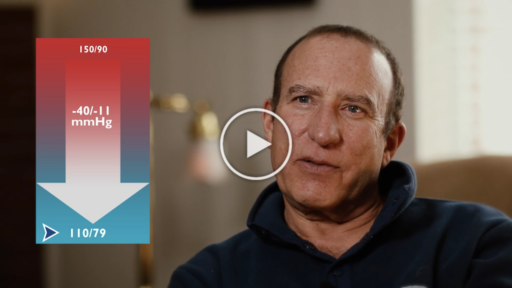
Watch How Mark Lowered His Blood Pressure Naturally.
It was 150/100, this morning it was 110/79
How UVA light releases nitric oxide from your skin
Your skin holds a large, quietly maintained reservoir of nitric oxide derivatives including nitrite and S-nitrosothiols. These compounds sit in the dermis and epidermis as photolabile cargo, waiting for a specific trigger. When ultraviolet A light strikes the skin, in the wavelength range of 320 to 400 nanometers, those compounds decompose and release free nitric oxide into the circulation. The release happens photochemically and essentially immediately. No enzyme needed.
Nitric oxide is a potent vasodilator. It relaxes the smooth muscle in artery walls and causes them to widen. Wider arteries offer less resistance to blood flow. Blood pressure falls.
What the randomized controlled trial found
In a randomized controlled trial published in the Journal of Investigative Dermatology, Liu, Weller, and colleagues at the University of Edinburgh exposed 24 healthy volunteers to two standard erythemal doses of whole-body UVA irradiation. Blood pressure fell measurably in the hour following exposure. Forearm blood flow rose. Circulating nitrate levels dropped while nitrite levels rose, consistent with the conversion of stored skin nitrate to vasoactive nitric oxide. Critically, dietary intervention designed to manipulate circulating nitrate had no effect on the blood pressure response. This confirmed that the cardiovascular effect came from pre-formed nitric oxide stores in the skin itself, not from nitrate already in the blood.
The effect ran independently of nitric oxide synthase, the enzyme that normally produces nitric oxide in the body. This means the ultraviolet light blood pressure reduction works through a pathway that supplements and medications targeting NOS cannot replicate. A standard vitamin D capsule triggers none of this.
The 2025 expert consensus: a mechanism beyond vitamin D
A June 2025 expert consensus report in Photochemical and Photobiological Sciences drew on a conference held in Washington DC in May 2024. It was authored by 17 researchers and confirmed this mechanism as one of several clinically significant non-vitamin D effects of ultraviolet radiation. The authors noted that the beneficial cardiovascular effects of sunlight extend far beyond vitamin D synthesis. The UV-to-nitric oxide pathway may account for the latitudinal and seasonal variations in blood pressure and cardiovascular disease that have puzzled researchers for decades.
This also helps explain why populations living at higher latitudes show higher rates of hypertension. The pattern holds independent of other known risk factors. Blood pressure rises consistently in winter months even among people with adequate dietary vitamin D intake.
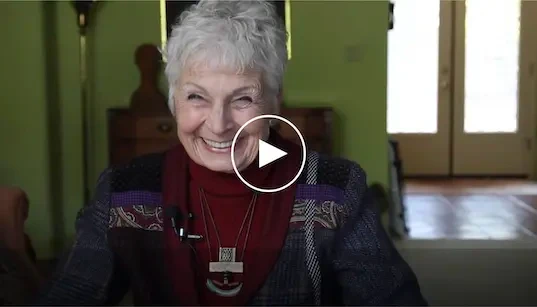
Watch how Julie Lowered her Blood Pressure Naturally.
It was 170/110, this morning it was 120/80
Learn More

Important editorial note: what the evidence does and does not show.
The blood pressure reduction observed in the Liu et al. trial was acute. It occurred in the hour following UVA exposure in a controlled clinical setting, using measured doses applied to healthy volunteers. This is not the same as saying that spending time outdoors will reliably lower blood pressure in a hypertensive person managing their condition long-term.
Several significant questions remain unanswered in the literature. Researchers have not yet established whether the acute blood pressure-lowering effect of UVA exposure persists with repeated exposure over time. The question of whether the skin’s nitric oxide reservoir replenishes consistently between exposures has not been resolved. The magnitude of the effect also varies between individuals in ways not yet fully understood. Additionally, the studies conducted to date involved healthy volunteers in controlled settings, not hypertensive patients in real-world conditions.
The 2025 expert conference report explicitly called for randomized controlled trials to explore the preventive and therapeutic potential of UV irradiation. That work is ongoing but incomplete. What the evidence clearly supports is that the mechanism is real, biologically plausible, and consistent across multiple independent studies. It does not yet support deliberate extended UV exposure or tanning as a treatment strategy for blood pressure.
The practical implication for people managing hypertension is measured. Spending moderate time outdoors in daylight is unlikely to be harmful and may carry cardiovascular benefit through this mechanism. That is different from seeking intense sun exposure or viewing UV radiation as a reliable treatment for high blood pressure.
How RESPeRATE fits
RESPeRATE addresses blood pressure through a related but distinct mechanism. Both nitric oxide release and the slow breathing that RESPeRATE guides share a common endpoint, which is vasodilation. RESPeRATE uses prolonged exhalation to activate the vagus nerve and calm sympathetic nervous system overactivation. That lowers vascular resistance and blood pressure through a pathway that operates independently of sunlight. For more on how the autonomic nervous system connects to blood pressure, see our post on stress and blood pressure.
RESPeRATE is the only FDA-cleared non-drug device clinically proven to lower blood pressure. Use it as part of your overall health program alongside your physician-directed treatment plan. Review the full clinical evidence at our clinical proof page.


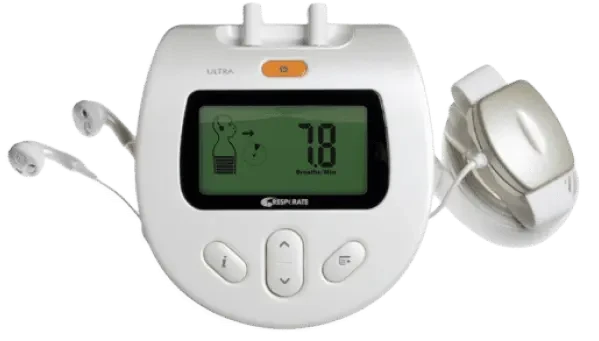
 Clinically proven

 Eli
Eli 





Comments