
 Brian Fairchild
Many women leave the hospital after a preeclampsia diagnosis and rarely hear about it again. The pregnancy ends, blood pressure normalizes, and the condition seems to disappear. But preeclampsia is not simply a pregnancy complication that resolves at delivery. It is a lifelong signal about future cardiovascular health. Most women are never told this before they leave the maternity ward. Understanding that signal, and what to do about it, can shape decades of preventive care.
What Preeclampsia and Gestational Hypertension Actually Are
Preeclampsia is a pregnancy-related high blood pressure disorder. It typically develops after 20 weeks of gestation in women whose blood pressure was previously normal. It involves elevated blood pressure alongside protein in the urine or other signs of organ stress. These can include reduced platelet counts or elevated liver enzymes. Gestational hypertension is a related but milder condition: high blood pressure without those additional organ-stress markers. Some women with gestational hypertension go on to develop preeclampsia as the pregnancy progresses. Together, these conditions affect a meaningful share of pregnancies, and many cases resolve within weeks of delivery. Still, resolution of the pregnancy does not always mean resolution of the underlying risk.
The Evidence: Why a Preeclampsia History Matters Years Later
Research now draws a clear line between preeclampsia and long-term cardiovascular risk. A large meta-analysis spanned more than 6.4 million women, including over 258,000 with a preeclampsia history. It found that preeclampsia independently predicted future heart failure, coronary heart disease, and stroke, even after researchers adjusted for other risk factors. Consequently, the American Heart Association now formally recognizes preeclampsia as a major risk factor for future cardiovascular disease. It considers the risk comparable in significance to more familiar markers like smoking or high cholesterol. Some analyses describe the increased risk in stark terms. Women with a preeclampsia history face roughly double the risk of stroke and heart disease in the five to fifteen years following pregnancy. The risk rises further for women who experienced early-onset or recurrent preeclampsia, or preeclampsia alongside other metabolic risk factors.
Why It Happens: A Vascular System That Doesn’t Fully Reset
The connection is not coincidental. Preeclampsia involves significant endothelial dysfunction: damage to the thin layer of cells lining blood vessel walls. In a healthy pregnancy, this lining regulates blood flow and vascular tone smoothly. In preeclampsia, that regulation breaks down. The resulting vascular stress does not always fully resolve after delivery. Researchers have not yet determined whether preeclampsia directly causes lasting vascular damage. It may instead reveal an underlying vulnerability that would have surfaced later regardless. Either way, the pregnancy functions as an early stress test, and a difficult result deserves follow-up rather than dismissal.
For a closer look at how vascular inflammation contributes to cardiovascular risk, see our post on arterial inflammation and blood pressure.
The RESPeRATE Research: Promising, But Early
A 2023 randomized trial published in Physiotherapy Quarterly examined device-guided breathing in 90 pregnant women with gestational hypertension. Researchers divided participants into three groups: aerobic exercise, device-guided breathing, and a control group. All participants continued their prescribed antihypertensive medication throughout the study. By the end of the trial, the device-guided breathing group showed a greater reduction in systolic and diastolic blood pressure. Its results outpaced both the exercise group and the control group.
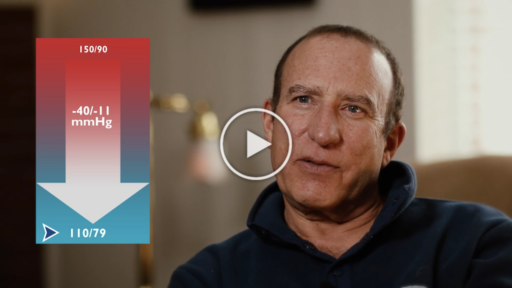
Watch How Mark Lowered His Blood Pressure Naturally.
It was 150/100, this morning it was 110/79
That result is encouraging, but it comes from a single study with 30 women per group. It should be read as a promising early signal rather than an established standard of care. Larger trials are needed before broader conclusions can follow. Just as importantly, every participant in this trial used device-guided breathing under close medical supervision, alongside her prescribed medication. This is consistent with RESPeRATE’s own precaution that pregnant women should consult their physician before using the device. If this research is of interest, the right next step is a conversation with your OB-GYN. It is not a self-directed decision to begin device-guided breathing during pregnancy.
Who Should Pay Attention to This
This connection matters most for a few groups. Women with any history of preeclampsia or gestational hypertension fall into the highest-priority group. This holds true regardless of how long ago the pregnancy occurred. Their primary care physicians and OB-GYNs also benefit from knowing this history. Many standard cardiovascular risk assessments still fail to ask about it. Family members matter too: a mother’s preeclampsia history can be a relevant data point for her daughters’ future risk conversations, given some evidence of familial clustering.
What Can Be Done
The good news is that much of this risk responds to the same interventions that help with hypertension generally.
Blood pressure monitoring should not stop at the postpartum checkup. The AHA recommends ongoing risk-factor screening for women with a preeclampsia history, not a one-time assessment. Bringing up your pregnancy history at annual physicals, even a decade or more later, gives your physician information that standard intake forms often miss.
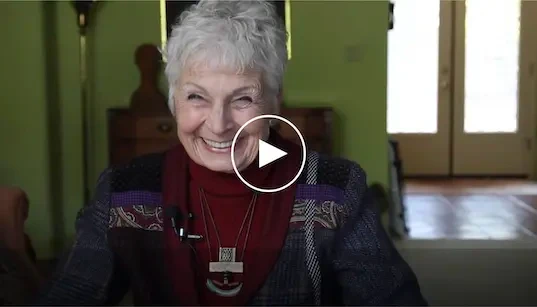
Watch how Julie Lowered her Blood Pressure Naturally.
It was 170/110, this morning it was 120/80
Learn More

Dietary patterns matter substantially here. The DASH diet emphasizes vegetables, whole grains, and reduced sodium. It aligns closely with what’s recommended for women managing this elevated risk. Regular physical activity, maintaining a healthy weight, and not smoking round out the core lifestyle recommendations the AHA points to for this population.
Where RESPeRATE Fits
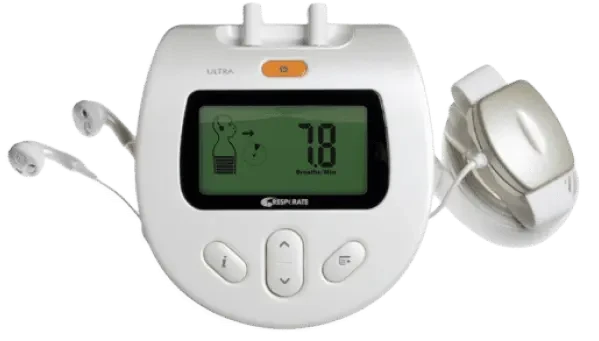
For women managing hypertension well beyond the postpartum period, RESPeRATE addresses a specific piece of the puzzle. This holds true whether the diagnosis is new or builds on a preeclampsia history from years earlier. The device targets the sympathetic nervous system pathway that keeps blood vessels constricted and blood pressure elevated. By guiding slow breathing with prolonged exhalation, RESPeRATE shifts the body from a sympathetic to a parasympathetic state. This relaxes blood vessels and eases that neural pressure. RESPeRATE is the only FDA-cleared, non-drug device clinically proven to lower blood pressure.
Use it as part of your overall health program alongside your physician-directed treatment plan.
Review the full body of evidence, including the gestational hypertension research discussed above, on our clinical proof page.
Summary
A preeclampsia or gestational hypertension diagnosis does not end when the pregnancy does. It is a documented, AHA-recognized marker of future cardiovascular risk. It deserves an ongoing place in a woman’s healthcare conversations for years and decades afterward. The underlying vascular stress that drives this connection responds to many of the same tools that help with hypertension broadly. These include consistent monitoring, the DASH diet, regular activity, and, for many women, breathing-based approaches like RESPeRATE used as part of a physician-guided plan. Recognizing pregnancy history as a lasting piece of cardiovascular risk, rather than a closed chapter, is one of the more actionable shifts a woman and her care team can make.


 Clinically proven

 Eli
Eli 





Comments