
 Brian Fairchild
L-Citrulline and Blood Pressure: The Supplement in Your Fruit Bowl You’ve Never Heard Of
Most people have never heard of L-citrulline — yet this natural amino acid is quietly building one of the strongest research cases for lowering blood pressure naturally. Furthermore, it works through a mechanism most medications don’t even touch.
You’ve actually been eating it for years. It’s in watermelon. In fact, the name citrulline comes from Citrullus vulgaris — the Latin name for watermelon — because that’s where researchers first discovered it back in 1914.
So what does a compound found in summer fruit have to do with your blood pressure? Quite a lot, it turns out.
What Is L-Citrulline and How Does It Affect Blood Pressure?
L-citrulline is a non-essential amino acid. Your body produces it naturally. It also plays a key role in the urea cycle — the process your body uses to remove waste products from protein digestion.
But its real relevance to blood pressure comes from what happens next. L-citrulline serves as a precursor to L-arginine, which is subsequently converted into nitric oxide — a key vasodilator involved in maintaining vascular tone, endothelial function, and blood pressure regulation. PubMed
In plain terms: your body converts L-citrulline into L-arginine. L-arginine then triggers the production of nitric oxide. Nitric oxide relaxes and widens your blood vessels. Wider blood vessels mean less resistance. Less resistance means lower blood pressure.
It’s a clean, elegant chain reaction — and it starts with something you can buy at any health food store.
Why Not Just Take L-Arginine Directly?
That’s a fair question. L-arginine is the actual precursor to nitric oxide — so why the extra step?
The answer is absorption. When you take L-arginine as a supplement, the gut and liver break most of it down before it ever reaches your bloodstream. Very little makes it through.
L-citrulline raises plasma L-arginine levels more effectively than oral L-arginine itself. It bypasses the gut barrier more efficiently. As a result, supplementing with L-citrulline is actually a more reliable way to boost nitric oxide than taking L-arginine directly. PubMed

Watch How Mark Lowered His Blood Pressure Naturally.
It was 150/100, this morning it was 110/79
What Does the Research Show About L-Citrulline and Blood Pressure?
The evidence for L-citrulline and blood pressure has grown significantly in recent years. Multiple randomized controlled trials and meta-analyses now support its use.
A meta-analysis of randomized controlled trials found that L-citrulline supplementation significantly reduced both systolic blood pressure by 4.49 mmHg and diastolic blood pressure by 3.63 mmHg. Those reductions may sound modest. In practice, a consistent reduction of that size has a meaningful impact on long-term cardiovascular risk. ResearchGate
A 2024 updated meta-analysis confirmed these findings, and a 2025 systematic review also indicated overall positive effects on vascular health in middle-aged and older adults. PubMed
The effects are most pronounced in people who already have elevated blood pressure. In other words, L-citrulline works best in the people who need it most.
Particularly Promising for Women After Menopause
One group stands out in the research — postmenopausal women. This is an important finding for a large portion of the blood pressure community.
Why are postmenopausal women especially affected? Aging and menopause are associated with decreased nitric oxide bioavailability due to reduced L-arginine levels, contributing to endothelial dysfunction — a condition that precedes arterial stiffness and hypertension development. SciELO Brazil
In other words, the drop in estrogen after menopause disrupts nitric oxide production. That directly leads to stiffer arteries and rising blood pressure. L-citrulline addresses that gap directly.
A clinical trial at Texas Tech University tested this specifically. Twenty-five hypertensive postmenopausal women were randomized to four weeks of L-citrulline supplementation (10 g) or placebo. L-citrulline increased L-arginine levels, improved endothelial function, and significantly reduced resting aortic diastolic blood pressure and mean arterial pressure compared to placebo. SciELO Brazil
A 2026 systematic review confirmed that citrulline, especially when combined with antioxidants, increases nitric oxide bioavailability and reduces oxidative stress in endothelial cells. That means better-functioning blood vessels — and lower blood pressure over time. nih
L-Citrulline and Arterial Stiffness
Blood pressure is only part of the picture. Arterial stiffness — how rigid your artery walls have become — is an equally important measure of cardiovascular health. Stiff arteries force the heart to work harder. Over time, that contributes to heart disease, stroke, and organ damage.
Research from Texas Tech University found that just two weeks of L-citrulline supplementation improved macrovascular endothelial function and aortic stiffness in postmenopausal women with elevated blood pressure and hypertension. nih
Two weeks. That’s a remarkably short window to see measurable improvement in arterial health.
How Does It Connect to Nitric Oxide — and Beets?
If you’ve read our post on beetroot and nitric oxide, this mechanism will feel familiar. Both beetroot and L-citrulline work by boosting nitric oxide production — just via different pathways. Beetroot delivers dietary nitrates that convert to nitric oxide directly. L-citrulline works upstream, feeding the amino acid chain that produces nitric oxide naturally.
The result is the same: more nitric oxide, more relaxed blood vessels, lower blood pressure.
Some researchers are now exploring whether combining the two approaches — dietary nitrates from beets alongside L-citrulline supplementation — produces an additive effect. The early signals are encouraging. That research is ongoing.
How Much Do You Need — and Where Does It Come From?
From food: Watermelon is by far the richest natural source. A healthy diet including L-citrulline-rich foods such as watermelon may contribute to the prevention of hypertension. Other sources include cucumbers, squash, and pumpkin — though in much smaller amounts. Achieving a therapeutic dose from food alone is not realistic. Watermelon simply doesn’t contain enough to replicate the doses used in clinical trials. PubMed Central
From supplements: Clinical trials have typically used doses ranging from 3 to 10 grams per day. Significant reductions in diastolic blood pressure were observed in studies that used doses of 6 grams per day or above. L-citrulline supplements are widely available in powder and capsule form. They’re generally well tolerated, with no significant side effects reported at standard doses. PubMed Central

Watch how Julie Lowered her Blood Pressure Naturally.
It was 170/110, this morning it was 120/80
Learn More

Important Caveats
L-citrulline is not a medication. It supports blood pressure health — it doesn’t replace your doctor’s recommendations or any prescribed treatment.
If you take medications for blood pressure, heart disease, or erectile dysfunction, speak with your physician before adding L-citrulline. It works on the same nitric oxide pathway as some of these medications. Combining them without guidance could lower blood pressure further than intended.
Pregnant women and people with kidney disorders should also consult a doctor before supplementing.
L-Citrulline, Blood Pressure, and Your Heart: The Bottom Line
L-citrulline is one of the most compelling natural supplements to emerge from recent cardiovascular research. It works by boosting nitric oxide production — the same mechanism that relaxes blood vessels and reduces blood pressure. Multiple meta-analyses confirm a consistent, meaningful reduction in both systolic and diastolic blood pressure, particularly in people already managing hypertension. The evidence is especially strong for women after menopause, where declining nitric oxide production is a direct contributor to rising blood pressure and arterial stiffness. It’s safe, well-tolerated, and increasingly well-researched. Above all, it’s a reminder that the body already has powerful tools for protecting heart health — sometimes it just needs the right building blocks to work with.
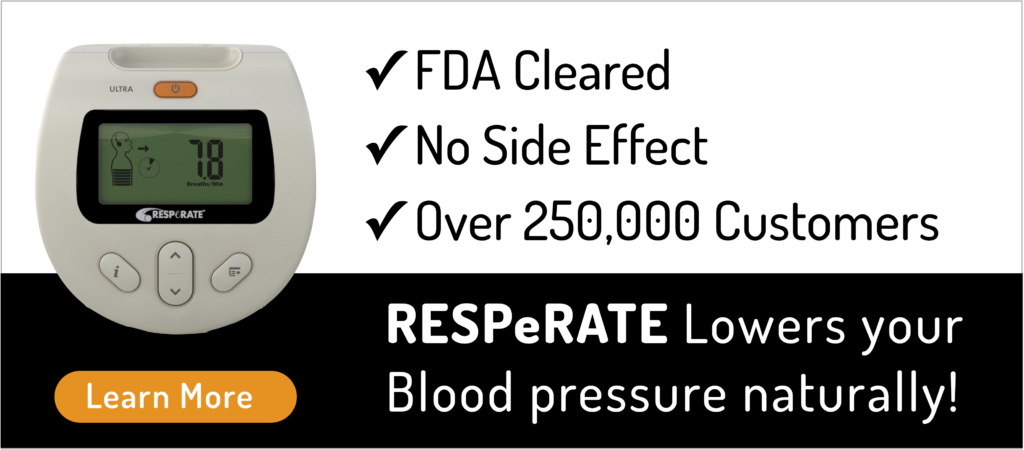
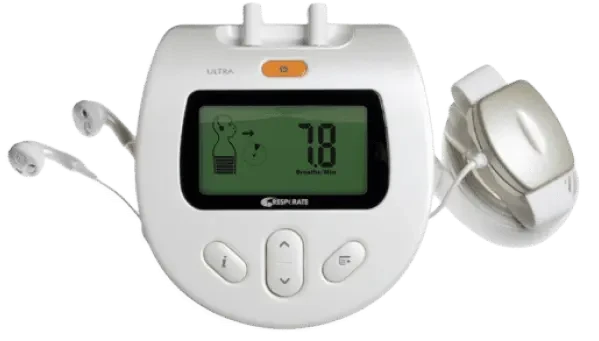
Managing blood pressure takes more than one strategy. Discover how RESPeRATE combines with a heart-healthy lifestyle to help you lower blood pressure naturally.


 Clinically proven



 Eli
Eli 


