
 Brian Fairchild
Waking up in the middle of the night is one of the most frustrating sleep disruptions there is. You’re tired — yet falling back to sleep feels impossible. Staring at the ceiling, your mind starts racing. The harder you try, the more awake you feel.
The good news is that falling back to sleep is a skill. What’s more, it can be learned. The strategies in this post are grounded in sleep science — and they work.
Why We Wake Up at Night
First, it helps to understand what’s actually happening. Sleep doesn’t run in a straight line from light to deep and back again. Instead, it moves in cycles — each one lasting roughly 90 minutes. Every cycle includes light sleep, deep sleep, and REM (rapid eye movement) sleep.
Waking briefly between cycles is completely normal. In fact, according to the National Sleep Foundation, most adults wake several times a night without even realizing it. The problem starts when you become aware of that waking — and can’t drift back off. That’s when falling back to sleep becomes the real challenge.
Poor sleep also carries consequences beyond fatigue. For example, the American Heart Association links chronic sleep disruption to elevated blood pressure, increased cardiovascular risk, and higher rates of hypertension. As a result, if you’re already managing high blood pressure, protecting your sleep is every bit as important as diet and exercise.

Watch how Julie Lowered her Blood Pressure Naturally.
It was 170/110, this morning it was 120/80
Learn More
How to Fall Back to Sleep: Six Proven Strategies
1. Use Controlled Breathing
This is the single most effective tool for falling back to sleep quickly. Slow, deliberate breathing activates the parasympathetic nervous system — the body’s natural “rest and restore” mode. As a result, it lowers your heart rate and signals to your brain that it’s safe to sleep.
Try this: inhale slowly through your nose for four counts. Then hold for four counts. Finally, exhale through your mouth for six to eight counts. Repeat five times.
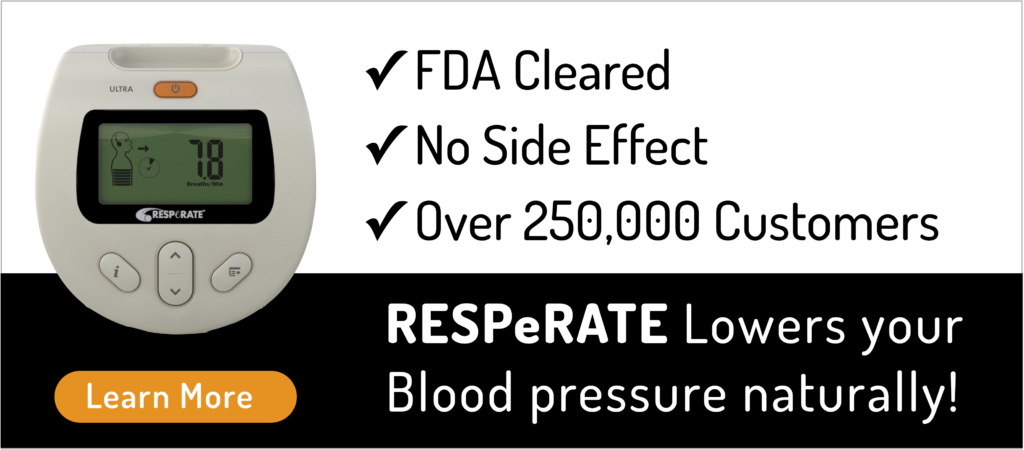
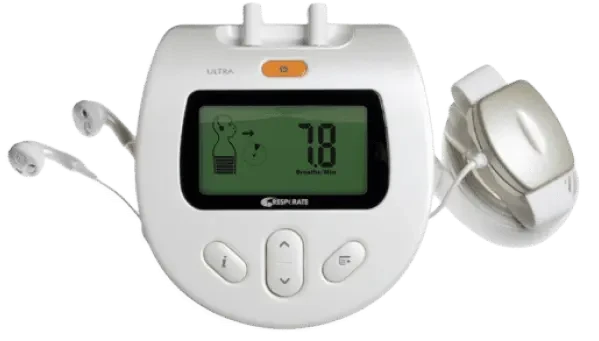
This is the same principle behind RESPeRATE’s guided breathing technology — slowing the breath to reduce physiological arousal. In short, it works for blood pressure and it works for sleep too.
2. Try Progressive Muscle Relaxation
Progressive muscle relaxation (PMR) shifts your attention away from racing thoughts and into your body. Start with your feet — tense the muscles firmly for five seconds, then release completely. From there, work slowly upward through your calves, thighs, abdomen, hands, arms, shoulders, and finally your face.
By the time you reach your head, your body is typically far more relaxed than when you started. In fact, many people fall asleep before they even finish. Furthermore, the National Institutes of Health supports PMR as an evidence-based intervention for sleep difficulties.
3. Practice Mindfulness — Without Forcing Sleep
Here’s what most people get wrong — trying hard to fall asleep makes it harder. The effort itself creates arousal. Instead, shift your goal from “falling asleep” to simply “resting quietly.”
Start by focusing on your breath. Then notice the weight of your body against the mattress. Let thoughts arrive without engaging them — observe them, then let them pass. This mindfulness approach, supported by research from Harvard Medical School, reduces the mental activation that keeps you awake.
4. Optimize Your Sleep Environment
Your bedroom environment directly affects your ability to fall and stay asleep. Keep the room cool — between 60 and 67°F (15–19°C) is the range most sleep researchers recommend. Darkness matters just as much, so consider blackout curtains if light is an issue. For noise, a white noise machine or even a simple fan can mask disruptive sounds effectively.
These aren’t luxuries — they’re sleep infrastructure. Small environmental changes, consistently maintained, make a surprisingly large difference over time.
5. Avoid the Clock
Looking at the time when you wake up is one of the worst things you can do. It triggers mental calculation — “I only have four hours left” — which increases anxiety and, as a result, makes falling back to sleep significantly harder. Simply turn your clock away from the bed. Better still, keep your phone face down and out of arm’s reach entirely.
6. Build Consistent Sleep Hygiene
No single-night strategy fully compensates for poor sleep habits. Consistent sleep hygiene is the foundation everything else rests on.
Start with a fixed schedule — the same bedtime and wake time every day, including weekends. This regulates your body’s internal clock more effectively than any other single habit. Beyond that, avoid caffeine after 2 p.m. Alcohol deserves attention too — while it may feel like it helps you relax, it fragments sleep cycles and reduces overall sleep quality significantly.
Screen time is another factor worth addressing. Avoid devices for at least 30 minutes before bed, since the blue light they emit suppresses melatonin — the hormone that signals your body it’s time to sleep. Instead, build a consistent wind-down routine: reading, gentle stretching, or slow breathing all serve as reliable cues that sleep is coming.
For more on how lifestyle habits affect blood pressure and sleep together, see our guide to natural blood pressure management.
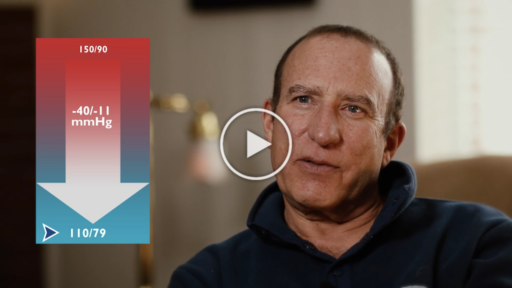
Watch How Mark Lowered His Blood Pressure Naturally.
It was 150/100, this morning it was 110/79

Sleep and Blood Pressure — The Connection Worth Knowing
Sleep and blood pressure are more closely linked than most people realize. Chronic sleep disruption raises nighttime blood pressure. It prevents the normal overnight “dip” that gives your cardiovascular system a chance to recover. Over time, that adds up to real cardiovascular strain.
If falling back to sleep is a regular struggle, it’s worth discussing with your physician — particularly if you’re managing hypertension. Addressing sleep quality is not separate from heart health. It’s part of it.
Summary
Falling back to sleep after waking is a skill — not luck. Controlled breathing, progressive muscle relaxation, mindfulness, and a sleep-supportive environment all make a measurable difference. So does consistent sleep hygiene built around a fixed schedule and low-stimulation evenings. Above all, start with one strategy tonight. Add another next week. Over time, restful nights become the rule rather than the exception — and your heart will benefit just as much as your energy levels will.
RESPeRATE’s guided breathing technology helps lower blood pressure and promote the deep physiological relaxation that supports better sleep. Learn how it works.


 Clinically proven


 Eli
Eli 




Comments