
 Brian Fairchild
Several readers of our post on magnesium and blood pressure asked the same question: which form of magnesium is best? One reader mentioned that her doctor specifically recommended magnesium taurate for cardiovascular support. Others asked why their inexpensive magnesium oxide supplement seemed to do nothing. These are good questions and they deserve a real answer.
The short version is that the form of magnesium you take determines how much of it your body can actually absorb and use. A supplement with 400 mg of magnesium oxide on the label may deliver a fraction of that to your bloodstream. The same dose in glycinate or citrate form reaches your cells far more efficiently. For blood pressure specifically, absorption is the variable that matters most.

Watch How Mark Lowered His Blood Pressure Naturally.
It was 150/100, this morning it was 110/79

Why form matters: the bioavailability problem
Bioavailability refers to the proportion of a nutrient that is absorbed into the bloodstream and available for the body to use. Magnesium oxide, the most common and least expensive form of magnesium supplement, has a bioavailability of roughly 4 percent according to research cited by Ranade and Somberg (2001, PMID 11550076). That means if the label says 400 mg, your body may absorb as little as 16 mg. The rest passes through the digestive tract and often causes a laxative effect in the process.
Organic forms of magnesium, those bound to amino acids or organic acids, absorb substantially better. The NIH Office of Dietary Supplements notes that the bioavailability of magnesium supplements varies by form and that some evidence suggests organic salts are better absorbed than inorganic forms such as oxide. A systematic review indexed at PMID 34111673 confirmed this finding across multiple preparations. For anyone taking magnesium to support blood pressure, choosing a form the body can actually absorb is not optional. It is the whole point.
The four main forms compared
Magnesium glycinate
Magnesium glycinate, also called magnesium bisglycinate, is magnesium bound to the amino acid glycine. It has high bioavailability and ranks among the gentlest forms on the digestive system. Glycine itself has a mild calming effect on the nervous system, which makes glycinate a practical choice for people who also want to support sleep quality alongside blood pressure.
The blood pressure evidence for magnesium as a category is solid. A 2016 meta-analysis in Hypertension covering 34 randomized controlled trials found that magnesium supplementation reduced systolic blood pressure by 2 to 4 mmHg and diastolic by 2 to 3 mmHg on average. Evidence specific to glycinate in blood pressure trials is still limited — most large meta-analyses pooled multiple forms — but its high absorption makes it one of the forms most likely to deliver the elemental magnesium that produces those effects. For blood pressure and general deficiency correction, glycinate is consistently the form most recommended by clinicians.
Best for: Blood pressure support, sleep quality, general deficiency, digestive sensitivity.
Typical dose: 320 to 400 mg elemental magnesium per day.
Magnesium citrate
Magnesium citrate is magnesium bound to citric acid. It is well absorbed, widely available, and less expensive than glycinate. A 24-week trial found that magnesium citrate supplementation at 350 mg per day produced a significant reduction in arterial stiffness, an established cardiovascular risk marker, even when blood pressure changes were modest. The researchers noted that the dose may have been insufficient to produce significant blood pressure effects and that meta-analyses show stronger BP effects when doses exceed 370 mg per day.
Citrate is more likely than glycinate to have a mild laxative effect at higher doses, which is worth knowing if digestion is a concern. At standard doses it is generally well tolerated.
Best for: Blood pressure support, arterial stiffness, general supplementation. A practical and cost-effective alternative to glycinate.
Typical dose: 320 to 400 mg elemental magnesium per day.
Magnesium oxide
Magnesium oxide is the most common form found in inexpensive supplements and in many standard multivitamins. It contains the highest percentage of elemental magnesium by weight, around 60 percent, which is why label amounts look impressive. The bioavailability, however, is the lowest of all common forms. At roughly 4 percent absorption, most of it does not reach the bloodstream.
Magnesium oxide is effective as an antacid and for acute constipation, which is why it appears in products like Milk of Magnesia. For the purpose of correcting magnesium deficiency or supporting blood pressure, delivers the least value for blood pressure support. If oxide is what you are currently taking and you have not noticed a meaningful effect, the form itself may be the reason.
Best for: Antacid use, constipation relief. Not recommended as a primary strategy for blood pressure support.

Watch how Julie Lowered her Blood Pressure Naturally.
It was 170/110, this morning it was 120/80
Learn More

Magnesium taurate
Magnesium taurate is magnesium bound to taurine, an amino acid found in high concentrations in heart muscle cells and nerve tissue. This is the form that draws the most clinician interest for cardiovascular-specific applications, and for good reason. Both magnesium and taurine independently support blood pressure regulation through related but distinct mechanisms. A 1996 review in Medical Hypotheses described their combined action as complementary vascular protection: magnesium relaxes arterial smooth muscle by blocking calcium influx, while taurine lowers blood pressure through effects on the renin-angiotensin system and reduces cortisol-driven cardiovascular stress.
Animal research published in the Journal of Traditional and Complementary Medicine (2019, PMC6435948) found that magnesium taurate restored blood pressure and reduced myocardial damage in hypertensive rats, outperforming control conditions. A separate randomized controlled trial published in Hypertension (2016, PMID 26826253) found that taurine supplementation alone lowered blood pressure and improved vascular function in prehypertension.
The important caveat is that most of the magnesium taurate evidence comes from animal studies or from taurine studied independently. Human trials specifically on magnesium taurate and blood pressure remain limited. Taurate shows promise and the mechanistic logic holds. It deserves its reputation as a cardiovascular-focused form. But the evidence base is thinner than for glycinate or citrate at this time.
Best for: Cardiovascular-specific applications, heart rhythm support, readers whose physician has specifically recommended it.
Typical dose: 300 to 400 mg elemental magnesium per day with taurine component included in the compound.
Dosing guidance and the additive effect with blood pressure medication
The NIH recommends staying within the tolerable upper intake level of 350 mg per day from supplements for most adults. Effects on blood pressure tend to be more pronounced at doses above 370 mg per day according to the meta-analysis data. Start at a lower dose and increase gradually, monitoring for digestive tolerance.
If you already take blood pressure medication, this is the most important point in this post. Magnesium has an additive blood pressure-lowering effect when taken alongside antihypertensive drugs. A 2025 meta-analysis in Hypertension found that participants taking blood pressure medication alongside magnesium achieved reductions of 7.68 mmHg in systolic and 2.96 mmHg in diastolic pressure, compared with modest or non-significant effects in those not on medication. That SBP reduction is clinically meaningful. A 5 mmHg reduction in systolic blood pressure is associated with roughly a 10 percent reduction in major cardiovascular events.
The additive effect means you need to discuss magnesium supplementation with your physician before starting, particularly if you take calcium channel blockers, ACE inhibitors, or diuretics. Diuretics specifically pull magnesium out through the kidneys, which is one reason people on diuretics often respond well to supplementation. Either way, talk to your physician before adding magnesium to your routine.
Timing: Space magnesium supplements 2 to 4 hours apart from blood pressure medications to avoid interfering with drug absorption. Most people find evening dosing practical and it avoids the alertness that a small number of people experience from magnesium taken at night. If you notice increased alertness from evening dosing, switch to morning.
The practical summary
- For most people managing blood pressure: Magnesium glycinate or magnesium citrate. High bioavailability, well tolerated, evidence-backed.
- For cardiovascular-specific applications or physician recommendation: Magnesium taurate. Promising dual mechanism but thinner human trial evidence. Follow your physician’s guidance.
- Avoid as a primary blood pressure strategy: Magnesium oxide. Low bioavailability means most of the label dose does not reach your bloodstream.
- On blood pressure medication: Discuss with your physician before adding magnesium. The additive effect is real and your physician needs to account for it in your treatment plan.
- Dose: 320 to 400 mg elemental magnesium per day from supplements. Effects on blood pressure are more pronounced above 370 mg per day.
- Timing: 2 to 4 hours apart from blood pressure medications. Morning or evening based on personal tolerance.
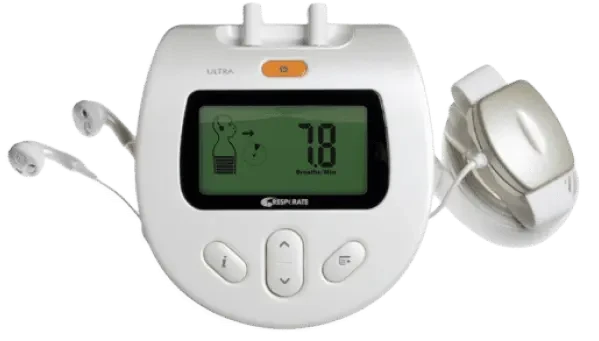
Where RESPeRATE fits
Magnesium supports blood pressure by relaxing blood vessels and calming the sympathetic nervous system. RESPeRATE addresses the same sympathetic nervous system pathway through slow, device-guided breathing that activates the vagus nerve and shifts the body out of a high-alert state. The two approaches work through complementary mechanisms and can be used alongside each other and alongside physician-prescribed medication. For the full background on magnesium and blood pressure, see our post on magnesium and blood pressure. For more on how stress drives blood pressure through the same nervous system pathway, see our post on stress and blood pressure.
RESPeRATE is the only FDA-cleared non-drug device clinically proven to lower blood pressure. Use it as part of your overall health program alongside your physician-directed treatment plan. Review the full clinical evidence at our clinical proof page.

 Clinically proven





Comments
2 Replies to “Magnesium Glycinate, Citrate, or Oxide: Which Form Actually Helps Blood Pressure?”
What about the efficacy of the L-Threonate form?
Great question. Magnesium L-threonate has attracted significant research attention for its ability to cross the blood-brain barrier, which makes it particularly promising for cognitive health and neurological applications. For blood pressure support specifically, the evidence base currently favors glycinate, citrate, and taurate, where we have direct cardiovascular trial data. L-threonate may well deliver general magnesium repletion benefits that support blood pressure indirectly, but we would not recommend it as a primary cardiovascular choice over the forms covered in this post. Worth discussing with your physician if you are already taking it for cognitive reasons alongside a blood pressure management plan.