
 Brian Fairchild
Magnesium and blood pressure share a relationship most people managing hypertension have never been told about. Magnesium is one of the most important minerals for cardiovascular health and one of the most commonly overlooked. The NIH reports that most older adults in the United States do not get the recommended daily amount from food alone. That gap has direct consequences for blood pressure.
Magnesium helps regulate hundreds of body systems, including blood pressure, blood sugar, and muscle and nerve function. Without enough of it, blood vessels struggle to relax and the sympathetic nervous system stays more active. As a result, blood pressure tends to run higher. For anyone managing hypertension, understanding magnesium is worth the time.
How Magnesium Helps Blood Pressure
Magnesium works on blood pressure through several documented pathways. It acts as a natural calcium channel blocker, helping arterial smooth muscle cells relax. Relaxed arteries offer less resistance to blood flow, which directly lowers blood pressure. It also helps maintain the sodium-potassium balance inside cells, supporting healthy vascular tone.
The recommended daily allowance is 420 mg per day for men aged 50 and older. For women aged 50 and older, the target is 320 mg per day. Most adults fall short through diet alone. The best way to close that gap is whole food sources. For more on how dietary choices broadly affect blood pressure, see our post on natural foods to lower blood pressure.
Magnesium Deficiency and Hypertension Risk
Low magnesium levels are associated with higher blood pressure in multiple population studies. A 2016 meta-analysis published in Hypertension found that magnesium supplementation produced meaningful reductions in systolic blood pressure across 34 randomized controlled trials. The mechanism is well understood. When magnesium is deficient, blood vessels are less able to relax fully between heartbeats. That persistent constriction raises the baseline pressure the heart works against.
Magnesium also plays a role in cortisol regulation. Research published in Nutrients confirmed it helps reduce circulating cortisol, the stress hormone that activates the sympathetic nervous system. Elevated cortisol keeps blood pressure higher than it should be. This makes adequate magnesium intake relevant not just as a nutritional issue but as a cardiovascular one. For a deeper look at the stress-blood pressure mechanism, see our post on how stress affects blood pressure.
If you take a diuretic for blood pressure, it is worth knowing that diuretics can increase magnesium excretion in urine. This is one reason people on certain antihypertensive medications develop magnesium deficiency over time. The NIH Office of Dietary Supplements notes this specifically. A conversation with your physician about testing and supplementation is appropriate if this applies to you.
It was 150/100, this morning it was 110/79
Watch How Mark Lowered His Blood Pressure Naturally.
The Best Whole Food Sources of Magnesium
Getting magnesium from food is preferable to supplements for most people. These eight sources are practical and widely available. Adding them consistently to the diet can meaningfully improve your intake.
- Dark leafy greens (spinach, Swiss chard). Around 78 mg per half cup cooked for spinach, 75 mg for Swiss chard. They pair easily with almost any meal and work as well frozen as fresh. Source: Cleveland Clinic / USDA FoodData Central.
- Kelp. One of the most concentrated magnesium sources available per gram of dry weight. It is not a staple in most kitchens. However, kelp stock can quietly replace chicken or beef stock in soups with minimal flavor change.
- Wheat germ. Around 70 mg per quarter cup. It stirs easily into oatmeal, yogurt, or smoothies without altering flavor. Source: USDA FoodData Central.
- Buckwheat. Around 86 mg per cup cooked. It is gluten-free and versatile. It also does not spike blood sugar the way refined grains do. Source: USDA FoodData Central.
- Garbanzo beans (chickpeas). Around 60 mg per half cup cooked. Blended with lemon and olive oil, they become hummus. That makes them one of the most convenient high-magnesium snacks available. Source: USDA FoodData Central.
- Almonds and cashews. Around 80 mg per ounce for almonds and 74 mg per ounce for cashews. Both are useful in salads, as a snack, or stirred into sauces. Source: Cleveland Clinic / USDA FoodData Central.
- Dark chocolate (70% cacao or higher). Around 65 mg per one-ounce serving. Aim for 70 percent cacao content or higher. It incorporates well into oatmeal, hot drinks, or light desserts. Source: USDA FoodData Central.
- Legumes (black beans, lentils, edamame). Around 60 mg per half cup cooked black beans, 50 mg per half cup edamame. Most people already rotate these through their meals each week. Source: Cleveland Clinic / USDA FoodData Central.
It was 170/110, this morning it was 120/80
Watch how Julie Lowered her Blood Pressure Naturally.


A Note on Magnesium Supplements
If food sources are not enough, magnesium supplements are widely available and generally well tolerated. The Mayo Clinic notes that magnesium glycinate and magnesium citrate are better absorbed and gentler on digestion than magnesium oxide. Magnesium oxide is the most common form in inexpensive supplements, but it is also the least bioavailable. For a deeper look at each form and which one may be most appropriate for blood pressure specifically, see our post on magnesium supplement forms and blood pressure.
Too much magnesium from supplements can cause diarrhea. There are no known adverse effects from magnesium obtained through food. If you take blood pressure medication, discuss supplementation with your physician first. Magnesium can have an additive blood pressure-lowering effect that may need to be accounted for in your treatment plan.
A small number of people find that magnesium makes them feel more alert rather than calm. If this happens, taking it in the morning rather than the evening avoids any disruption to sleep. Magnesium isn’t the only mineral worth a look if you’re troubled by poor sleep. See what the research says about selenium and sleep.
Where RESPeRATE Fits
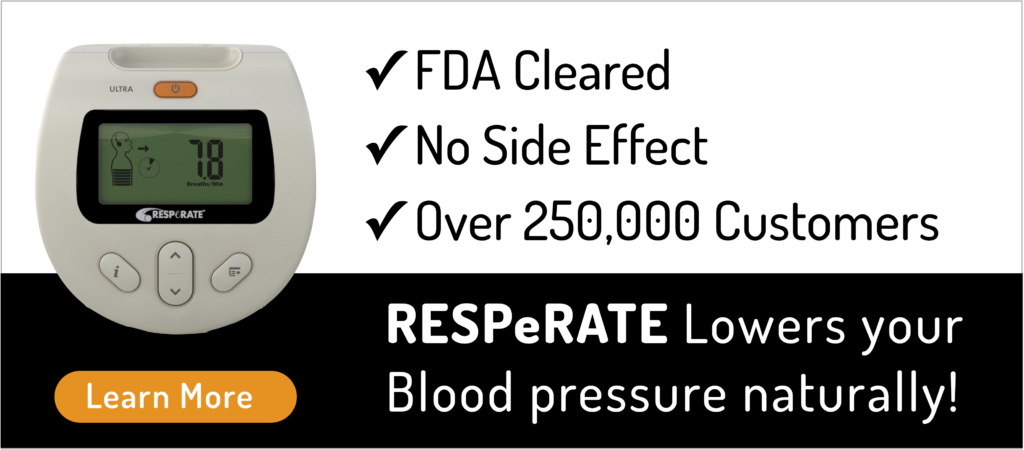
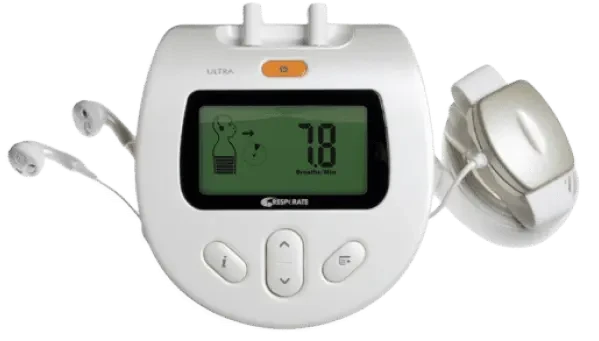
Magnesium supports blood pressure by helping blood vessels relax and reducing sympathetic nervous system activity. RESPeRATE addresses the same nervous system pathway through a different route. It guides slow breathing with prolonged exhalation, shifting the body from a high-alert state into a calmer parasympathetic mode. The two approaches are complementary rather than competing. For more on dietary tools that support blood pressure alongside magnesium, see our guidance on the DASH diet.
RESPeRATE is the only FDA-cleared non-drug device clinically proven to lower blood pressure. Use it as part of your overall health program alongside your physician-directed treatment plan. Review the full evidence at our clinical proof page.
Magnesium isn’t the only supplement worth understanding. Quercetin, nattokinase, vitamin C, and olive leaf extract all come up regularly. On the caffeine side, green coffee bean extract works differently than a regular cup, and stevia is worth knowing about if you’re cutting sugar.

 Clinically proven

 Eli
Eli 





Comments